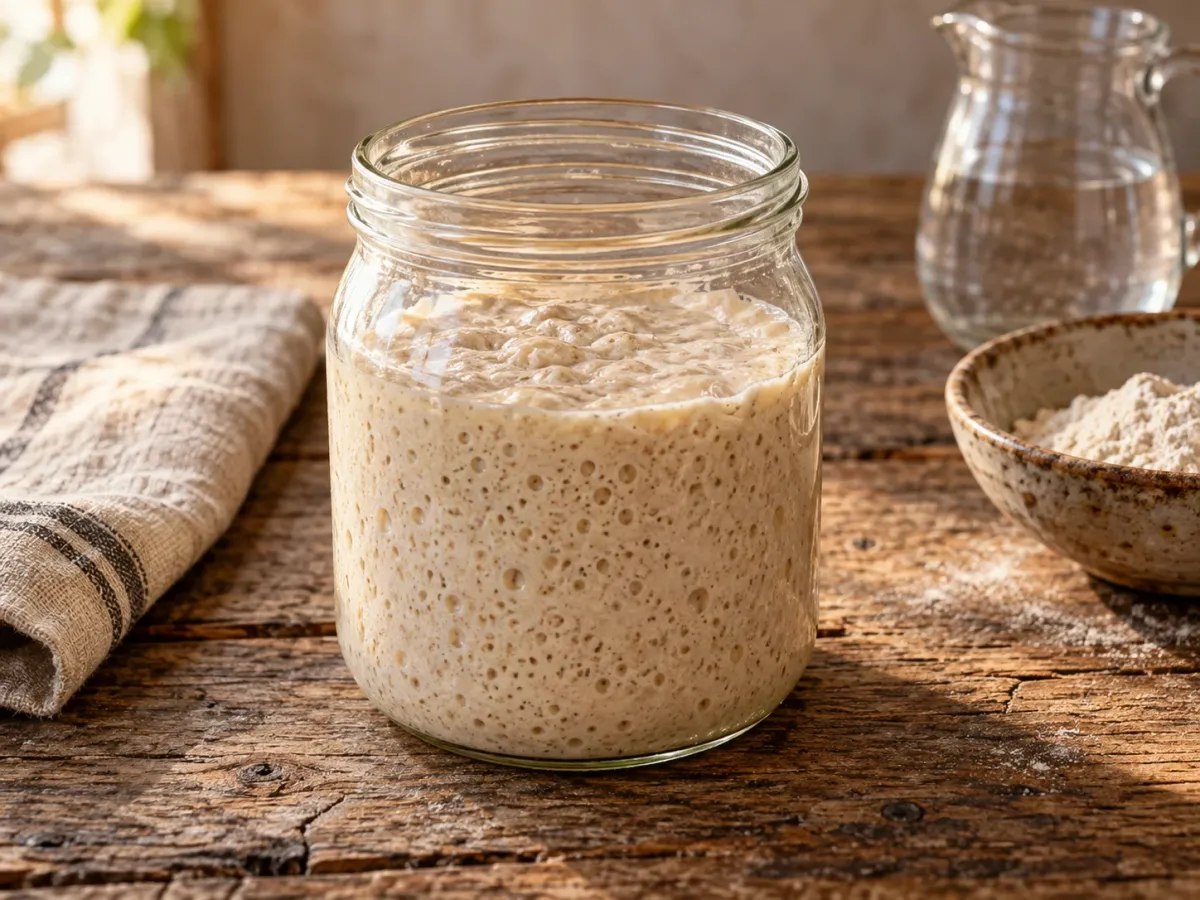
Sourdough starter
Build a flour-and-water sourdough starter with daily feeds and clear signs of readiness for baking.
Prep
5 min
Cook
0 min
Prep + cook
5 min
Yield
About 260 g starter after a daily feed
Estimated timings. About 5 minutes per feed, plus at least 7 days to establish reliably; cooler rooms can take longer. No cooking until used in bread.
Ingredients
- 50 g wheat or rye flour per feed, plus more for later feeds
- 80 g drinking water per feed, at room temperature
Method
- 1
Day 1: stir 50 g flour and 80 g water in a clean jar of at least 750 ml capacity. Scrape down the sides, mark the level and cover loosely so gas can escape. Keep around 21–24°C.
- 2
After 24 hours, look for bubbles. Retain 130 g of mixture, discard any excess, and feed with 50 g flour and 80 g water. Stir and loosely cover again. If there is no activity, allow another day before the next feed.
- 3
Repeat the daily feed, retaining 130 g before each addition. Days 3–4 may show activity, but continue for a week or longer if needed. Do not taste raw starter.
- 4
Use for bread only once the starter rises predictably after several consecutive feeds, has bubbles throughout and smells pleasantly tangy. A single early burst or float test alone does not establish readiness.
- 5
Keep some starter back whenever baking. Feed it, allow activity to begin, then refrigerate with room for expansion and a loose cover. Feed about weekly.
- 6
Before baking after refrigeration, give one or more room-temperature feeds until the starter again rises reliably. A plain alcohol-smelling liquid layer can be poured off; discard the entire starter for fuzzy or coloured mold, pink or orange discoloration, or a rotten smell.
Watch a living culture
Wheat and rye flour both support a starter, but they produce different textures. This relatively wet mixture looks more like batter than bread dough. A clear-sided jar and a level mark let you see whether it rises after feeding. The first bubbles can appear before a stable culture develops, so repeatable activity matters more than an exact day number.
Feed and keep it clean
Remove excess before each feed to give the retained culture enough fresh flour. Use clean utensils and leave plenty of headroom. Never taste uncooked starter: flour needs cooking. Colorado State University Extension explains the importance of regular feeds and discarding moldy cultures.
Plan your baking
A refrigerated starter needs time to become active again. Schedule feeds before making sourdough potato bread, and keep a little culture for the next batch. For a same-day project while the culture develops, make damper.