Damper
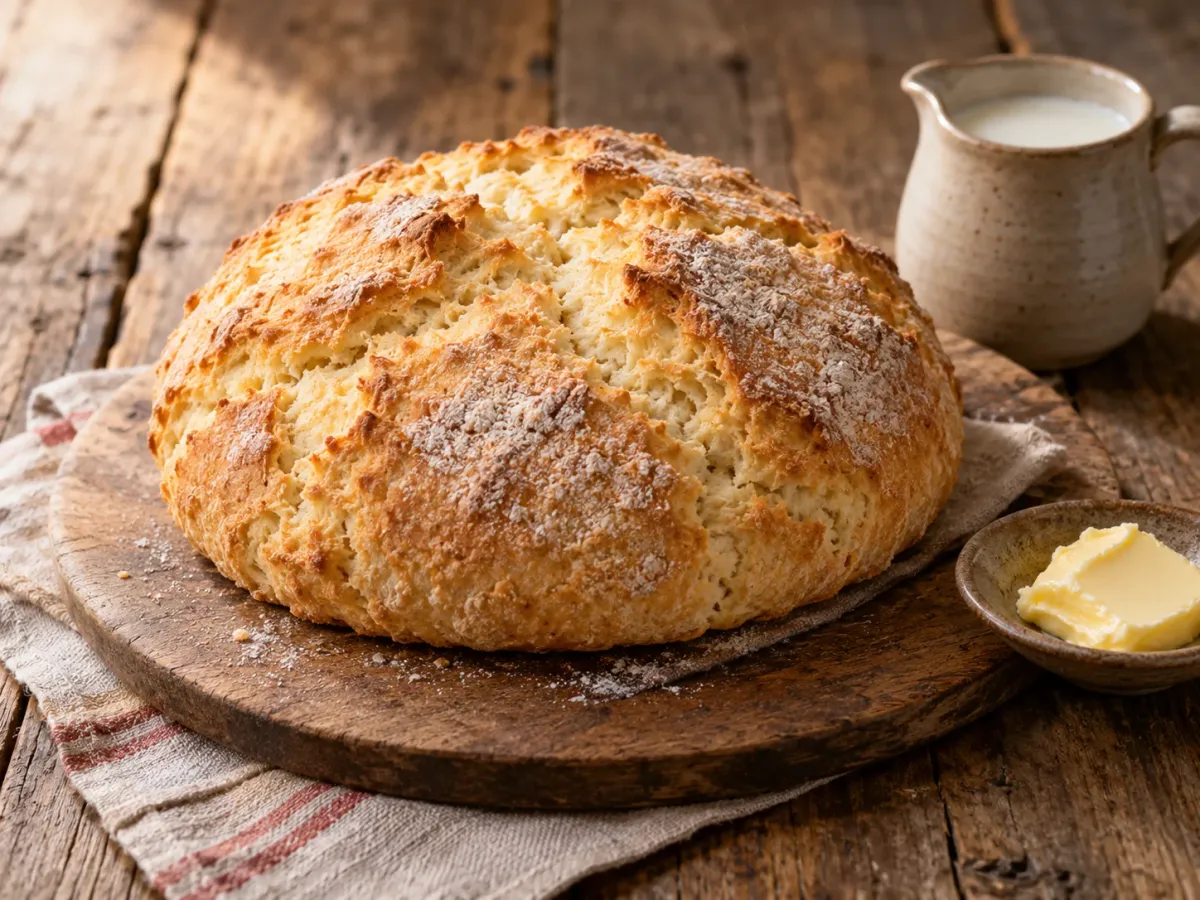
Bake a round damper loaf with self-raising flour, milk and butter, with a crisp crust and soft crumb.
Prep
15 min
Cook
45 min
Prep + cook
60 min
Serves
15
Estimated timings. Includes oven heating and 30–35 minutes baking; allow 15 minutes cooling.
Ingredients
- 600 g self-raising flour (4 cups), plus a little for dusting
- 15 g butter, softened, plus a little for greasing
- 240 ml milk
- 120 ml water, plus 1–2 tablespoons if needed
- 1 teaspoon fine salt
Method
- 1
Heat the oven to 220°C and grease a baking sheet. Allow about 15 minutes for preheating.
- 2
Combine flour and salt in a bowl. Rub in the butter with your fingertips until no large pieces remain.
- 3
Stir in milk and water until a rough dough forms. If dry flour remains, add water a tablespoon at a time.
- 4
Turn onto a lightly floured surface and knead briefly, just until the dough holds together. Shape into a round about 5 cm thick and score a deep cross on top.
- 5
Bake for 25 minutes, then lower the oven to 175°C and bake for 5–10 minutes more. The loaf should be deeply golden and sound hollow when tapped underneath.
- 6
Cool on a rack for at least 15 minutes before slicing.
A tender quick bread
Damper gives you a substantial round loaf without a yeast rise. Self-raising flour does the lifting, so your job is to keep the dough supple and handle it lightly. The small amount of butter softens the crumb without making this an enriched loaf. Measure flour without packing it tightly into the cup; weight is the more consistent guide.
Shape for an even centre
A very tall ball can brown before its middle cooks. A broad round lets heat reach the centre, while the cross gives the crust room to open. Expect a close, slightly crumbly texture rather than the stretch of yeasted bread.
Serve while fresh
You get the best crust on the day of baking. Cut small wedges for soup, or split warm slices and add butter. For another flour-and-water project with a longer rest, try pizza dough. Toast leftover slices to restore their edges.