Bread
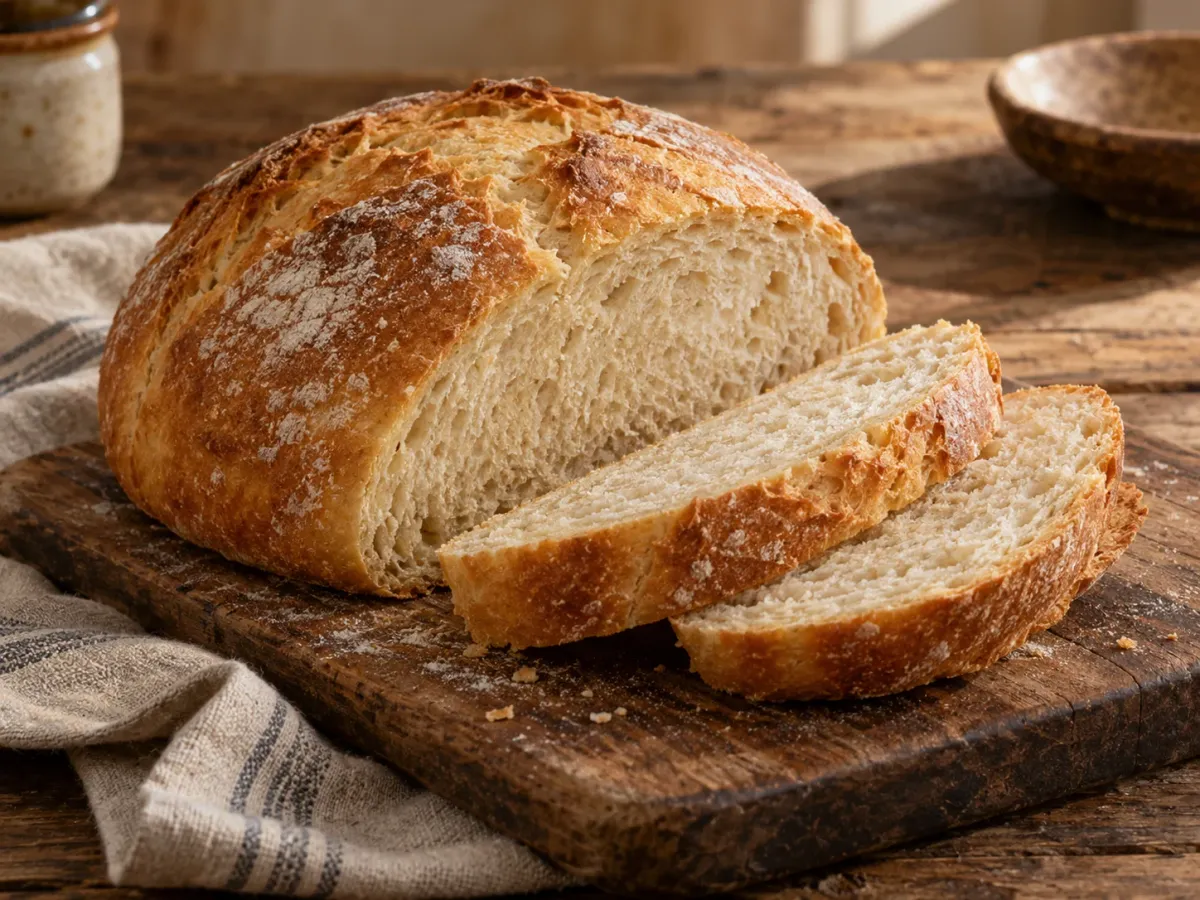
Bake a simple flour-and-water loaf with a little maple syrup, a soft crumb and a crisp crust made with oven steam.
Prep
30 min
Cook
35 min
Prep + cook
65 min
Yield
1 large loaf
Estimated timings. Allow 10 minutes to activate yeast, 2 hours for the first rise, 45–60 minutes for the second, and at least 1 hour to cool. Preheat during the second rise.
Ingredients
- 355ml warm water, divided, about 40–43°C
- 7g active dry yeast
- 1 tsp sugar
- 2 tbsp maple syrup, agave syrup or honey
- 1½ tsp fine salt
- 470g plain flour, plus a little for dusting
- 1 tsp olive oil, for the bowl and loaf tin
- 240ml hot water, for the steam pan
Method
- 1
Mix 60ml of the warm water with the yeast and sugar in a large bowl. Leave for 10 minutes until foamy; replace the yeast if no foam develops.
- 2
Stir in the remaining 295ml water, syrup, salt and flour. Mix, then turn and squeeze with your hands until no dry pockets remain; the dough will be sticky.
- 3
Lift the dough out, oil the bowl lightly and return the dough. Cover and leave at room temperature for about 2 hours, until doubled.
- 4
Knead on a lightly floured surface for about 10 minutes until elastic. Shape into a loaf, tuck the seam underneath and place in a greased 23 x 13cm loaf tin or on a baking tray.
- 5
Cover loosely and leave for 45–60 minutes until visibly puffy. During the last 20 minutes, heat the oven to 220°C and put an empty shallow metal roasting tin on the bottom rack.
- 6
Slash the loaf two or three times about 1cm deep. Place on the middle rack, then carefully pour the hot water into the metal tin, keeping your face and hands away from the steam. Close the door.
- 7
Bake for 26–35 minutes until deep golden and the base sounds hollow when tapped. If using a thermometer, the centre should be about 93–96°C.
- 8
Rest in the tin for 5 minutes, then turn onto a rack. Cool completely before slicing. Store wrapped at room temperature for up to 3 days, or slice and freeze.
A dough that stays supple
You want a tacky dough rather than a stiff ball. Flour absorbs water differently, so use only a light dusting on the counter when kneading. Adding handfuls of flour makes shaping easier but gives you a tighter, drier crumb. The small amount of syrup rounds out the flavour without making this a sweet loaf.
Steam and scoring
Steam keeps the outside flexible while the loaf expands. Use a metal pan because glass and ceramic can crack when water hits a hot surface. Shallow cuts give that expanding dough a route through the crust; a loaf that tears at the side often needs a clearer score or a little more proofing.
Slicing and changing the shape
Cooling lets the crumb set, so slicing a hot loaf can make it seem gummy. You can also shape this dough into rolls before the second rise. Bake those at 180°C without the steam pan and start checking after 18 minutes. For a wholemeal version, replace up to 250g of the plain flour and expect a denser loaf.
Serve slices with French onion soup, or compare this dough with Italian bread.