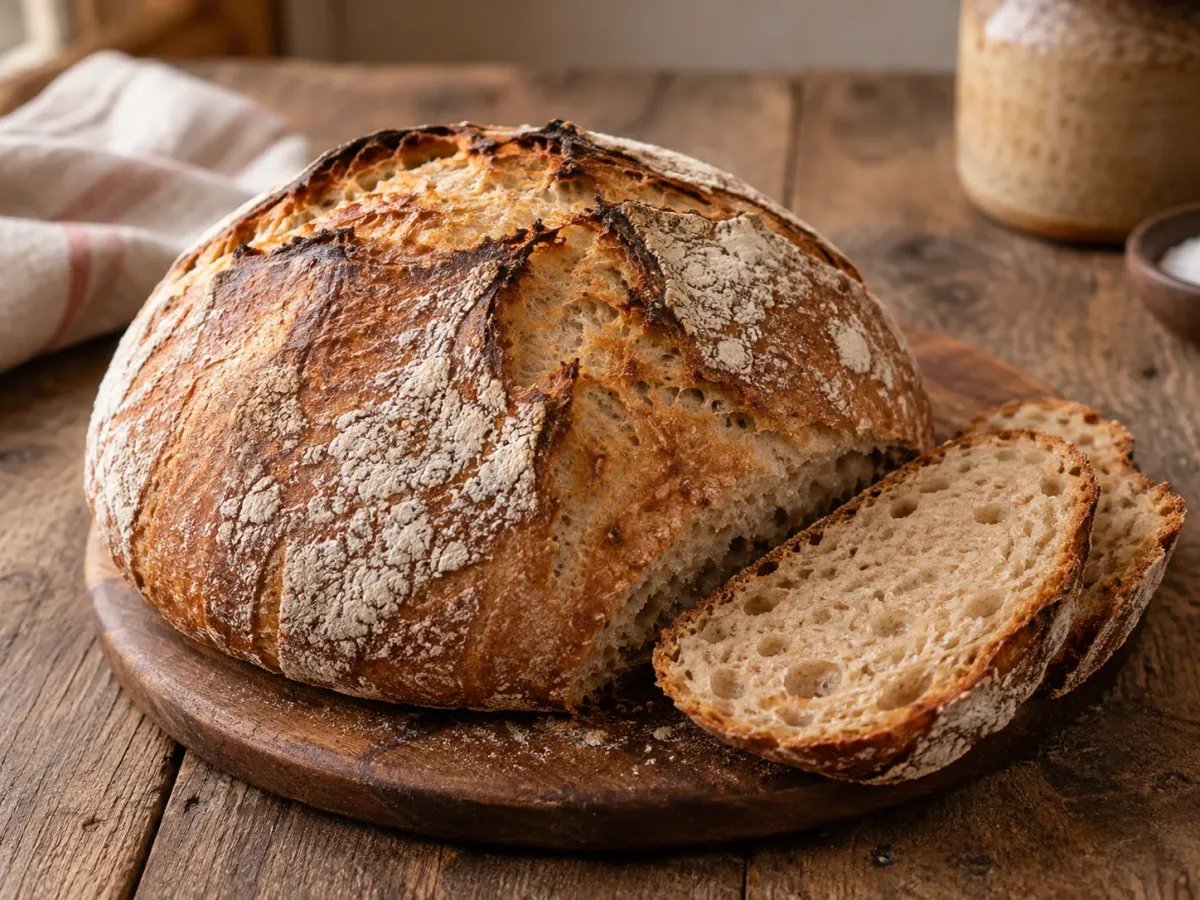
Potato sourdough bread
A wheat-and-rye sourdough loaf enriched with boiled potato, baked hot with steam for a crisp crust and tender crumb.
Prep
30 min
Cook
90 min
Prep + cook
120 min
Serves
12
Estimated timings. Includes potato boiling, oven heat-up and a 45-minute bake. Allow about 5 hours rising, potato cooling and 1 hour loaf cooling.
Ingredients
- 150 g potatoes, weighed before boiling, scrubbed
- 350 g wheat bread flour, plus a little for shaping
- 50 g whole rye flour
- 11 g salt
- 150 g water, lukewarm
- 250 g active, bubbly sourdough starter
Method
- 1
Cover the potatoes with water in a saucepan. Bring to a boil and simmer for 20–30 minutes, until a knife passes through easily. Drain, cool until safe to handle, peel and mash finely. Let cool to lukewarm.
- 2
Mix the potato, wheat flour, rye flour, salt, water and active starter. Knead for 8–10 minutes until cohesive and elastic; the dough may remain tacky.
- 3
Cover and leave in a warm place, around 25–30°C, for about 4 hours, until visibly aerated and substantially expanded.
- 4
Shape gently into a round or oval loaf on baking parchment. Cover and leave for about 1 hour, until puffy and a light finger indentation springs back slowly. Allow longer if the starter or room is cooler.
- 5
Heat the oven to 250°C with a heavy baking tray inside and a separate sturdy metal tray on the lower shelf. Score the loaf and slide it onto the hot baking tray.
- 6
Carefully pour a small cup of hot water into the lower tray, keeping your face and hands away from the steam. Bake for 10 minutes.
- 7
Open the door briefly to release steam, remove the water tray carefully and reduce the oven to 220°C. Bake for about 35 minutes more, until deeply browned and the base sounds hollow.
- 8
Cool on a wire rack for at least 1 hour before cutting.
Potato and rye in the crumb
Mashed potato brings moisture and tenderness, while a small amount of whole rye adds flavor without making this a dense rye loaf. Mash out lumps before mixing: pieces of potato can tear the dough during shaping. Use a starter that is visibly active rather than one taken straight from a long stay in the refrigerator.
Let the dough set the pace
Five hours is a useful warm-room guide, but sourdough responds to temperature and starter strength. Look for an aerated dough and a puffy shaped loaf before baking. Starter hydration affects dough firmness, so yours may feel slightly tackier or stiffer depending on the starter you use.
A crust worth waiting for
Steam delays the crust setting during the first part of the bake. Once the loaf is out, patience matters again: cutting it hot can compress the moist crumb. Serve thick slices with beef liver and onions, or explore no-knead pizza dough for a simpler long-rise dough.