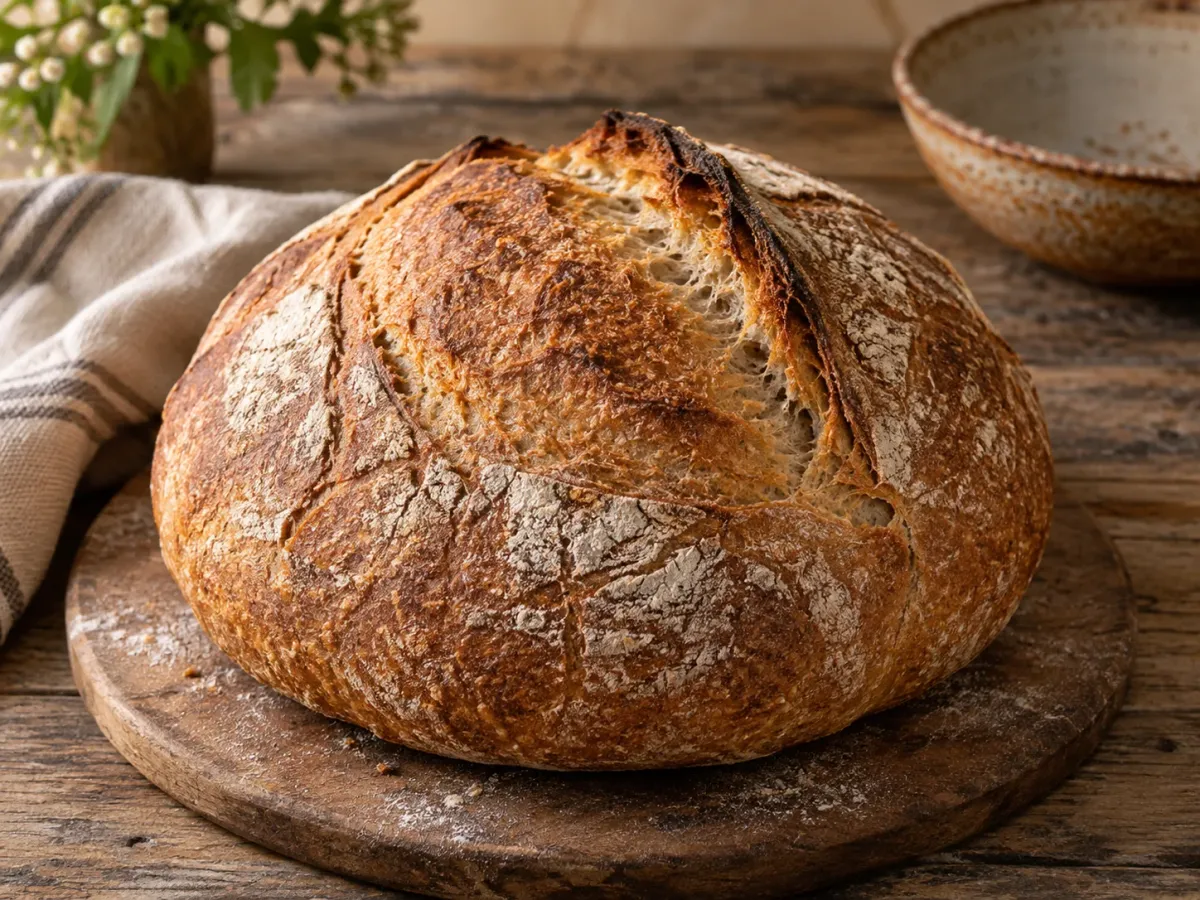
Sourdough Table Loaf
A mixed-flour sourdough loaf with stretch-and-fold development and an overnight refrigerated proof.
Prep
45 min
Cook
75 min
Prep + cook
120 min
Yield
1 loaf, about 10 slices
Estimated timings. Active prep is spread across fermentation. Allow 30 minutes initial rest, 4–5 hours bulk fermentation, 12–24 hours refrigerated proof, 1–2 hours warming and 2 hours cooling. Cook time includes 30 minutes preheating.
Ingredients
- 100g fed sourdough starter (levain)
- 330g warm water
- 137g bread flour
- 250g all-purpose flour (avoid bleached and enriched)
- 87g rye or whole wheat flour
- 7g sea salt
Method
- 1
Stir the active, recently fed starter into 330 g warm water. Add all three flours and mix until no dry flour remains; cover and rest for 30 minutes.
- 2
Sprinkle in the salt. With wet hands, lift one edge of dough and fold it over the centre, turning the bowl to repeat on all four sides. Add only a few drops of water if needed to incorporate the salt.
- 3
Cover and ferment at room temperature for about 4–5 hours, folding every 30 minutes during the first 2 hours. Continue resting until the dough is aerated, noticeably expanded and has bubbles around the edges; extend the rest if still dense.
- 4
Turn out gently onto a floured surface. Fold opposite edges into the centre, then roll or tuck into a taut round without pressing out all the gas.
- 5
Place seam-side up in a generously floured proving basket or cloth-lined bowl. Cover and refrigerate for 12–24 hours.
- 6
Allow the dough to warm for 1–2 hours until puffy and a light finger indentation returns slowly. Heat the oven and a suitable lidded Dutch oven to 250°C for at least 30 minutes.
- 7
Turn the loaf onto baking paper, score the top with a sharp blade and lower carefully into the hot pot. Cover and bake for 15 minutes.
- 8
Uncover, reduce the oven to 220°C and bake for 25–30 minutes more, until the crust is deeply browned and the base sounds hollow. Cool on a rack for at least 2 hours before slicing.
Start with lively starter
Your starter should be bubbly and expanded after feeding, rather than cold and inactive. The measured flour blend combines bread flour strength with the flavour and absorption of rye or wholemeal. Keep the original water amount at first: a wet dough becomes easier to handle as flour hydrates and folds build structure. See sourdough starter if you need to maintain the culture.
Read fermentation separately from strength
Stretching a thin window of dough shows gluten development; it does not establish that fermentation is finished. Look for expansion, bubbles and a lighter, gently wobbling dough as well. A cold room or sluggish starter changes the clock considerably. Wet hands help you fold without adding enough bench flour to change the recipe.
Build crust, then let it settle
The covered pot supplies the humid start that lets the score open. Once uncovered, the crust can brown and dry. Slice only after the centre cools or the crumb can seem gummy. For an overnight loaf made with commercial yeast instead, compare no-knead bread.