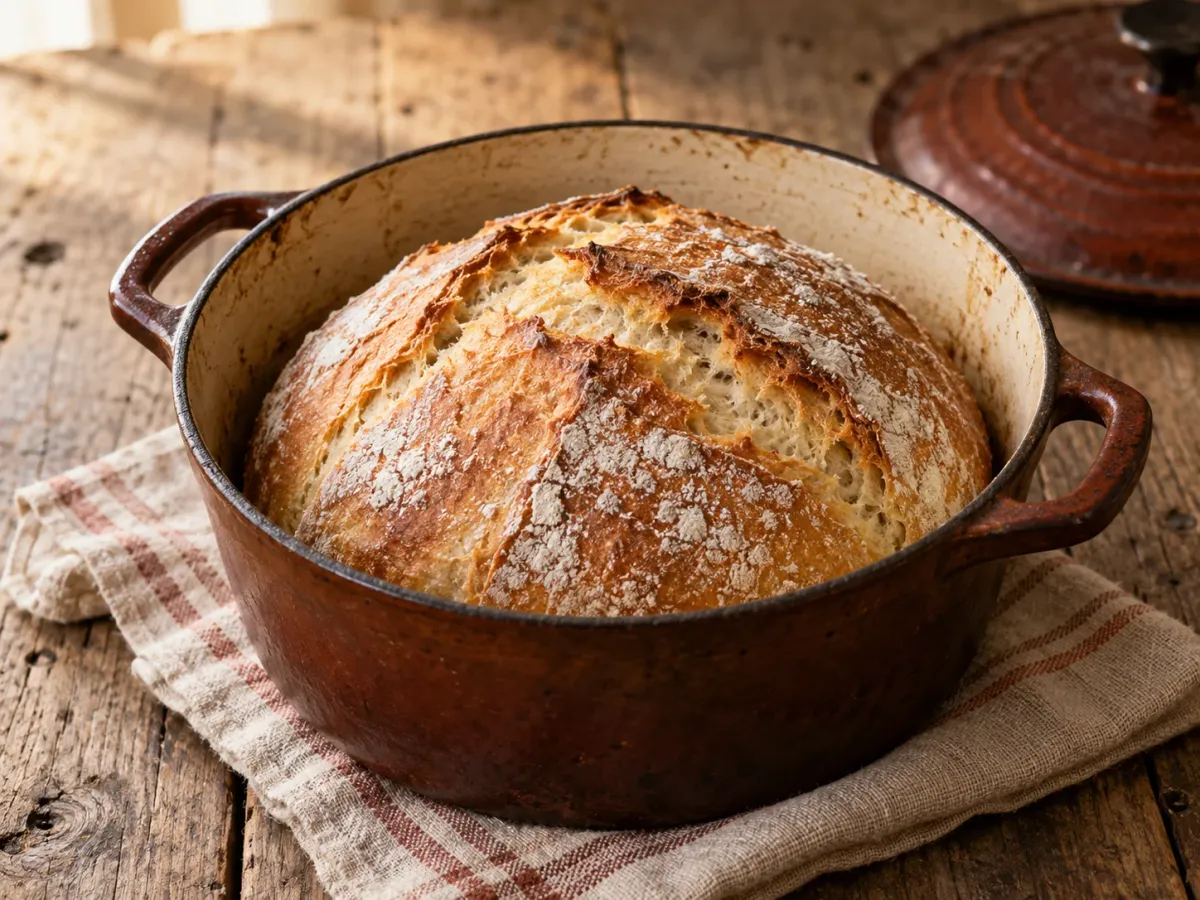
No-knead Bread
An overnight yeast loaf baked covered for a crisp crust and open crumb.
Prep
15 min
Cook
80 min
Prep + cook
95 min
Yield
1 loaf, 8–12 slices
Estimated timings. Includes 30 minutes to heat the oven and pot, then 50 minutes baking. Allow 12 hours fermentation, optional refrigeration up to 48 hours, and 1 hour cooling.
Ingredients
- 375 g plain flour (about 3 cups), plus flour for handling
- 1 tsp fine salt
- 1/4 tsp instant yeast, or a scant 1/3 tsp active dry yeast
- 360 ml lukewarm water
Method
- 1
Mix the flour, salt and yeast in a large bowl. Stir in the lukewarm water until no dry patches remain; the dough will be sticky, not kneadable.
- 2
Cover the bowl and leave at room temperature for about 12 hours, until bubbly and expanded. You can then refrigerate it, covered, for up to 48 hours.
- 3
Place an oven-safe lidded pot in the oven and heat to 230°C for 30 minutes; use only a pot, handle and lid rated for that temperature.
- 4
Scrape the dough onto well-floured baking paper, fold the edges inward to form a rough round and use the paper to lower it carefully into the hot pot.
- 5
Cover and bake for 30 minutes. Remove the lid and bake for 20 minutes more, until deeply browned and hollow-sounding underneath.
- 6
Lift onto a rack and cool for at least 1 hour before slicing.
Let time develop the dough
This loaf relies on a long, slow fermentation rather than a kneading session. The dough should look rough at mixing, then bubbly and relaxed after its overnight rest. Lukewarm water is enough; hot water can damage the small amount of yeast. Measure flour by weight so that a tightly packed cup does not turn the mixture dry.
Trap steam early
A covered pot holds moisture around the loaf while it expands. Removing the lid later lets the surface dry and colour. Use a vessel rated for the oven temperature, including its handles. Sourdough table loaf uses a similar covered start with a different fermentation schedule.
A useful everyday loaf
Expect a rustic shape rather than a neat sandwich tin. Cool the bread before cutting, then slice only what you need; the cut face dries faster than the crust. Serve it with potato soup, or toast older slices until their edges regain some crunch.