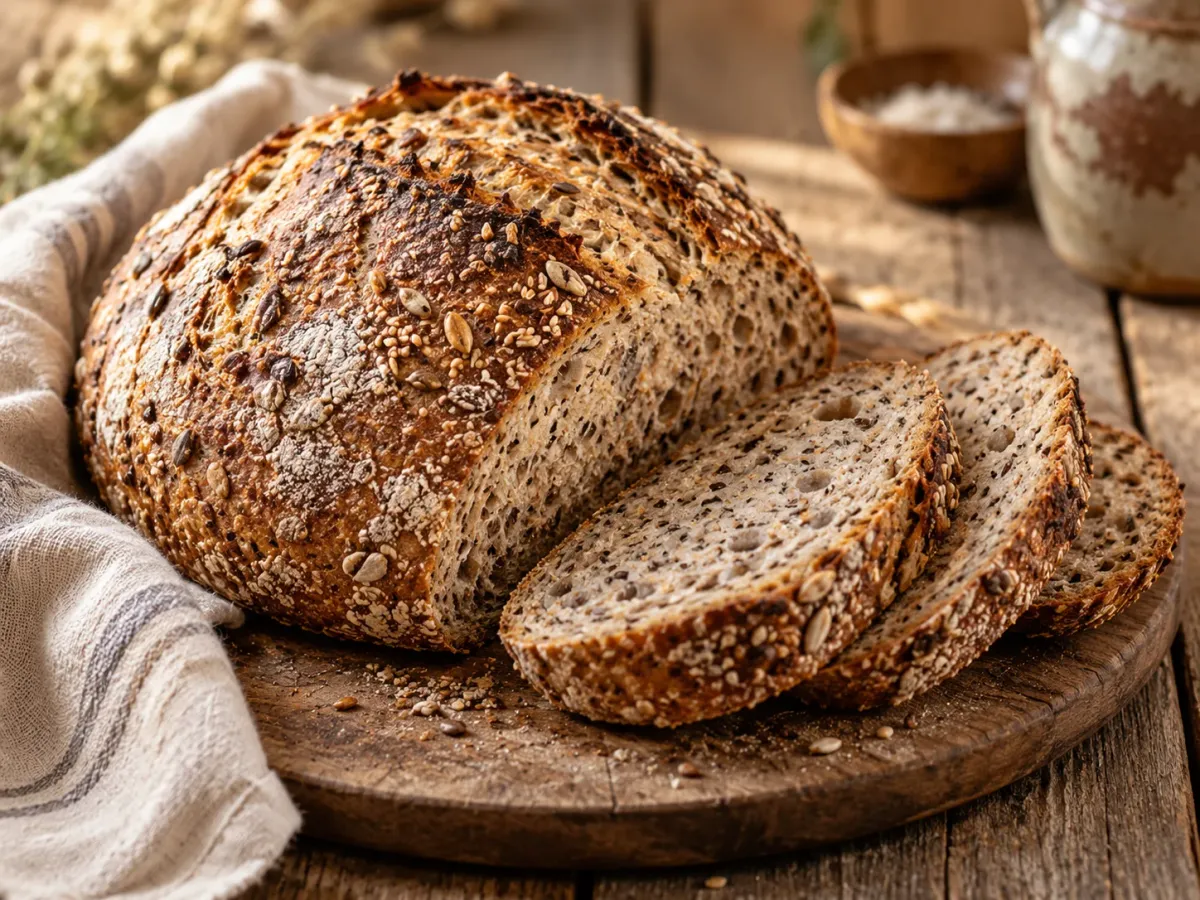
Sourdough bread with seeds and grains
A substantial rye and wheat sourdough loaf with soaked seeds, cooked grains and a gently spiced crumb.
Prep
30 min
Cook
145 min
Prep + cook
175 min
Yield
1 large loaf
Estimated timings. Start the day before: allow 13–16 hours for soaking, 5 hours rising and at least 4 hours cooling. Cooking includes grain boiling and oven heating.
Ingredients
Preparation
- 100g whole rye, spelt or wheat grains
- 40g linseed
- 30g sesame seeds
- 30g sunflower seeds
- 600g water, divided
Dough
- 400g ripe sourdough starter
- 200g water, 25–35°C
- 200g rye flour
- 300g wheat bread flour
- 20g sea salt
- 2 tsp bread spice, such as a ground caraway, coriander and fennel blend
- All the prepared seeds and grains
- 1 tsp oil, for the tin
Method
- 1
Feed your starter so you have 400g ripe, bubbly sourdough starter ready the next day.
- 2
Simmer 100g whole grains in 500g water for about 45 minutes until tender. Drain, cool promptly and refrigerate in a covered bowl overnight.
- 3
Mix the linseed, sesame and sunflower seeds with 100g water. Cover and refrigerate for 13–16 hours.
- 4
Drain any free water from the grains and seeds. Mix with the starter, 200g lukewarm water, rye flour, wheat flour, salt and bread spice. Knead until evenly combined; the rye makes the dough tacky.
- 5
Shape into a loaf and put in a generously greased large loaf tin, about 30cm long. Cover and leave at 25–30°C for around 5 hours until visibly expanded and aerated.
- 6
Heat the oven to 250°C, with an empty metal steam tray below the loaf shelf. Put the loaf in, carefully add a small cup of boiling water to the steam tray and close the door.
- 7
Bake for 20 minutes. Stand back when opening the door to release steam; remove the steam tray if safe, lower the oven to 150°C and bake for 50–60 minutes more.
- 8
The crust should be firm and the centre fully baked, around 96–98°C on a probe. Remove from the tin and cool on a rack for at least 4 hours before slicing.
Plan for ripe starter
The large proportion of starter supplies both flavour and lift. Use it while bubbly and active rather than straight from a neglected jar. Its hydration changes how sticky this dough feels, so judge it as a soft, tacky rye dough rather than forcing it into a dry wheat-bread ball. Explore bread for a simpler dough to practise handling.
Grains need their own preparation
Cooking whole grains first keeps hard kernels out of the finished crumb. Seeds absorb water too; their overnight soak prevents them drawing it from the dough later. Refrigerate the cooled preparations, then allow them to lose their chill while you assemble the other ingredients.
Give the crumb time to settle
Rye-rich bread slices poorly while hot. Cooling on a rack lets moisture distribute through the loaf and keeps the sides from sweating inside the tin. Slice thinly for butter, cheese or soup; potato leek soup makes a gentle partner.