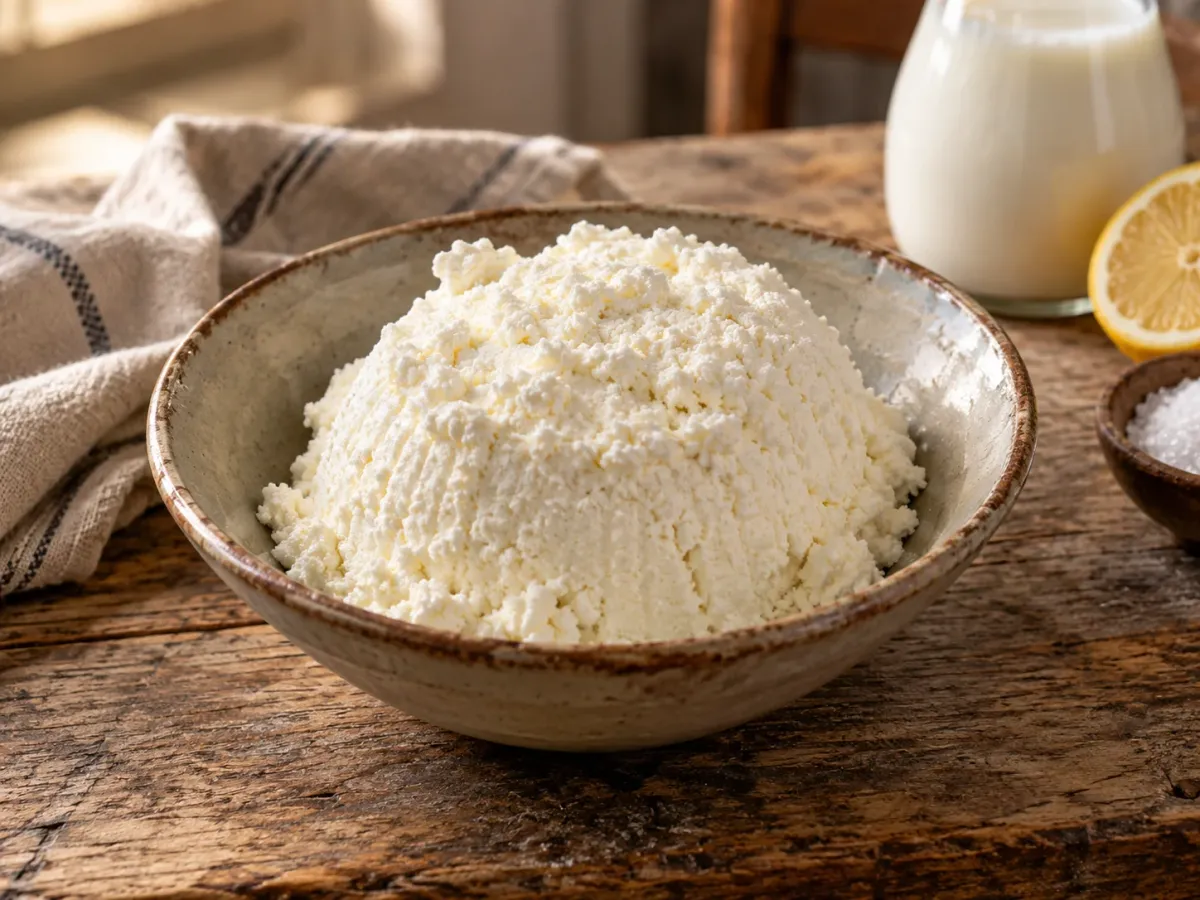
Ricotta
Soft fresh ricotta made by heating milk or sweet whey and gently draining the curds through cloth.
Prep
10 min
Cook
25 min
Prep + cook
35 min
Yield
About 250–400g milk ricotta; less from whey
Estimated timings. Allow 10 minutes for curds to settle and 20–60 minutes draining. Yield varies with milk, whey and draining time.
Ingredients
- 2 litres pasteurized whole milk, OR 2 litres fresh sweet whey plus 500ml pasteurized milk
- 10g fine salt
- Up to 6g citric acid dissolved in 2 tbsp water, OR up to 130ml lemon juice
Method
- 1
Clean the pot, thermometer, sieve, cloth and storage container. Use either 2 litres pasteurized whole milk, or 2 litres fresh sweet whey plus 500ml pasteurized milk.
- 2
Stir milk and/or whey with salt over medium-low heat until it reaches 80°C, scraping the base to prevent scorching.
- 3
Add citric acid dissolved in 2 tbsp water, or lemon juice, gradually while stirring gently. Stop adding when curds separate from clearer whey; you may not need the full amount with acidic whey.
- 4
Heat gently to 90°C without a vigorous boil. Turn off the heat and leave undisturbed for 10 minutes.
- 5
Ladle the curds into a cloth-lined sieve over a bowl. Drain for 20–60 minutes, moving to the fridge once it can be handled safely, until the texture suits your use.
- 6
Transfer to a clean covered container and refrigerate at 4°C or below. Use within 3 days.
Milk and whey give different yields
Whole milk makes a fuller, richer batch. Sweet whey left from rennet cheese contains less recoverable protein, so its yield is smaller even with added milk. Very acidic whey may not behave the same way. Use fresh refrigerated whey rather than liquid that has stood warm.
Handle curds gently
Strong stirring breaks the soft curds into particles that escape through the cloth. Once separation begins, use only slow movements. A thermometer helps you reach the right heat without boiling the pot hard or scorching the milk at the base.
Drain for the dish
A softer ricotta suits bread, while a firmer drained version is easier to use in ravioli. Keep it chilled and expect some whey to separate during storage; simply drain that off before using.