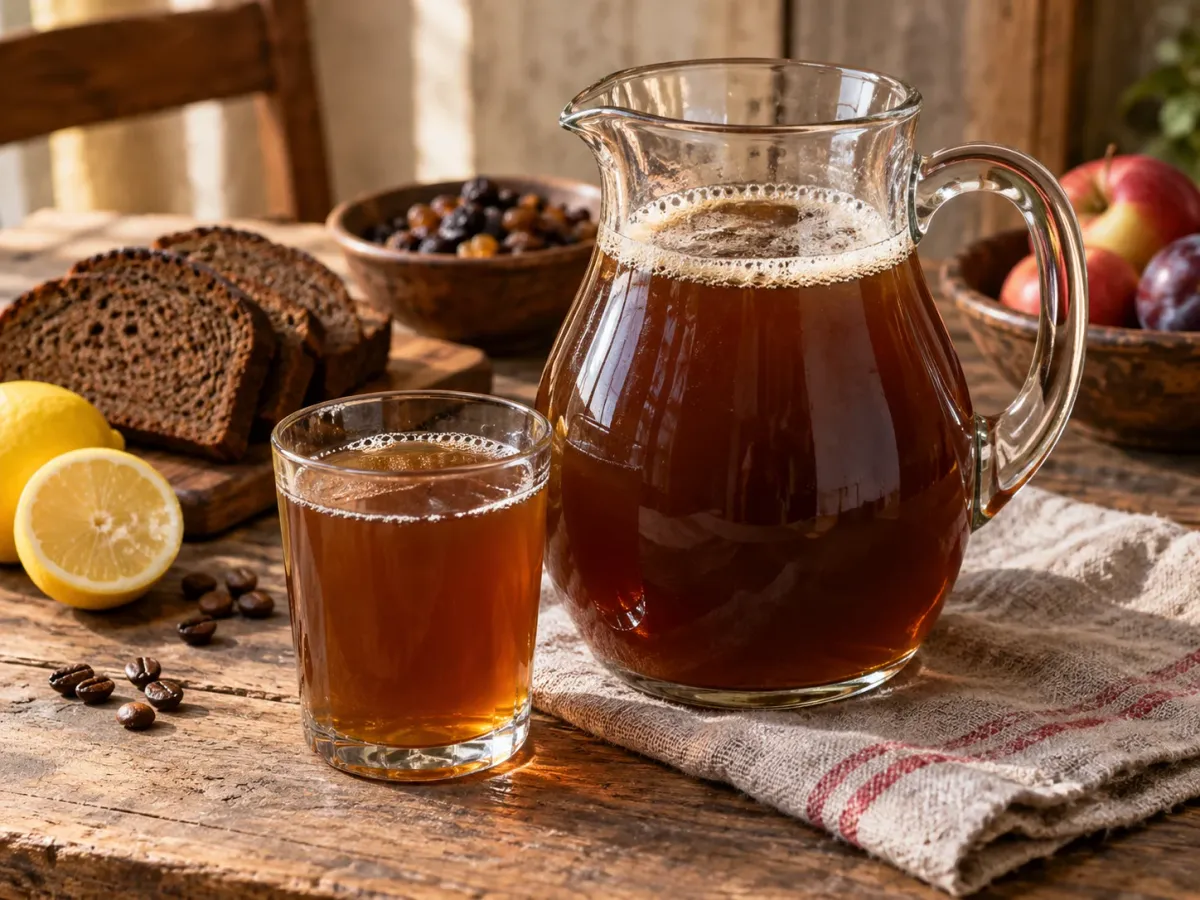
Kvass
A yeast-fermented rye-bread drink with raisins, lemon and optional coffee or fruit.
Prep
25 min
Cook
20 min
Prep + cook
45 min
Yield
About 1 litre
Estimated timings. Allow 1–2 hours cooling, about 1 week fermentation (possibly longer) and several hours chilling. Active times do not include fermentation.
Ingredients
- 1 litre water
- 100 g raisins, divided
- 100 g sugar
- 3 slices dark rye or pumpernickel bread (about 120 g)
- 1–2 lemons, washed
- 7 g active dry yeast
- 10 g coffee beans, optional
- 100 g chopped apple, plum or kiwi, optional
Method
- 1
Clean and sanitize a 2 litre food-safe fermentation vessel, airlock, strainer and stirring tools according to the sanitizer instructions.
- 2
Toast the bread until deeply browned, without burning it black. Bring 1 litre water to a boil, remove from the heat and add the bread, half the raisins, a few lemon slices and optional coffee beans.
- 3
Cover and cool to room temperature, about 1–2 hours. Strain into the fermentation vessel and stir in the sugar and yeast. Add the remaining raisins and optional chopped fruit, leaving ample headspace.
- 4
Fit an airlock so carbon dioxide can escape; never seal an actively fermenting drink in a closed jar. Keep at a steady temperature within the yeast manufacturer’s range and ferment for about a week.
- 5
Keep fruit below the liquid with sanitized equipment. If you see fuzzy mould or smell putrid spoilage, discard the batch. Bubbling alone does not prove fermentation is complete; check that hydrometer readings remain unchanged over several days.
- 6
Strain out fruit and raisins, then add lemon juice to taste. Refrigerate in a vessel that can vent residual gas and drink promptly. Do not bottle-condition this batch in sealed glass; fermentation produces alcohol in an amount that is not established by this recipe.
Toast for bread flavour
Dark rye bread gives the infusion its colour and malty, toasted character. Deep browning is enough; burning the slices black introduces harsh bitterness. Raisins and optional fruit add another layer of flavour, while coffee makes the drink more roasted. Keep those additions modest so the bread remains noticeable.
Give the gas an exit
Yeast turns sugar into alcohol and carbon dioxide. An airlock lets that gas escape while limiting exposure to the room; a sealed mason jar can build pressure. Clean equipment and a suitable fermentation vessel matter more than a rigid one-week countdown. The same distinction between activity and completion matters in mead.
Chill only after checking progress
Cold storage slows yeast but does not guarantee it stops. Keep residual gas able to escape and avoid adding sugar for sealed carbonation. The alcohol content varies with fermentation and requires measurement rather than a promise. For a drink you can serve immediately, try orange glorious.