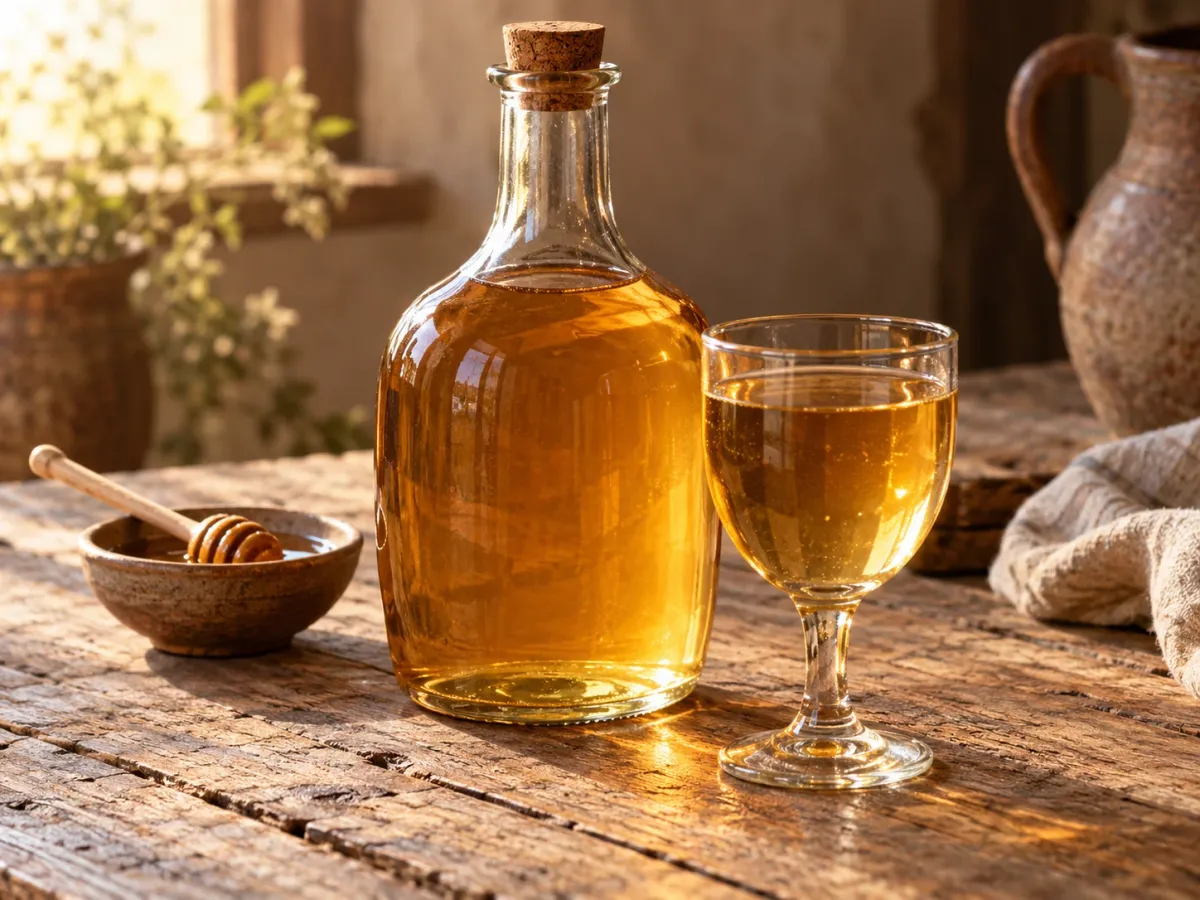
Mead
Honey, water and brewing yeast fermented under an airlock into still mead, with hydrometer checks before bottling.
Prep
25 min
Cook
0 min
Prep + cook
25 min
Yield
Approximately 4.5 litres before sediment losses
Estimated timings. No cooking. Allow at least 4–8 weeks fermentation and clearing, often longer, plus optional aging; bottling depends on confirmed completion, not a calendar.
Ingredients
- 3.8 litres drinking water
- 1.36kg honey
- Brewing yeast suitable for mead, dosed according to its packet for this volume
- Yeast nutrient if required by the yeast supplier, used according to its directions
Method
- 1
Clean and sanitise a food-safe brewing vessel of at least 6 litres, its airlock, mixing tools and hydrometer equipment according to the sanitiser instructions.
- 2
Mix the water and honey thoroughly in the vessel. Take and record an initial hydrometer reading using a sanitised sample tool. Add brewing yeast at its labelled dose and follow its temperature and nutrient instructions.
- 3
Fit a proper fermentation airlock with the correct liquid level. Never ferment in an airtight sealed vessel: pressure can shatter glass. Keep at the yeast supplier’s recommended temperature, checking the airlock daily.
- 4
Allow fermentation and clearing for several weeks, commonly 4–8 weeks or longer. Take hydrometer readings on separated days when activity slows. Bottle only after repeated stable readings indicate fermentation has completed; a high stalled reading needs investigation, not bottling.
- 5
Transfer off sediment into sanitised bottles only when fermentation is confirmed complete. Do not add fruit or honey before sealing; additions need further airlocked fermentation and new stable readings, or a validated stabilisation method. Age further if desired.
Honey shapes the flavour
The honey supplies both aroma and fermentable sugar. A floral honey remains noticeable in a simple mead with no fruit or spices. Yeast choice and fermentation conditions affect the result, so you cannot infer sweetness or alcohol content from honey quantity alone.
Give fermentation room
Use a brewing vessel larger than the starting liquid volume, with a proper airlock and space for foam. Sanitise anything that touches the mead after mixing. The American Homebrewers Association guide explains equipment and fermentation checks in more detail. An airlock vents gas continuously; briefly opening a sealed container is no substitute.
Patience before bottling
Bubbles slowing down does not prove fermentation has finished. Use stable hydrometer readings and investigate a stalled ferment before you bottle. Fruit or extra honey can restart fermentation. Serve finished mead with pretzels or fondue; allow additional aging if the young flavour is harsh.