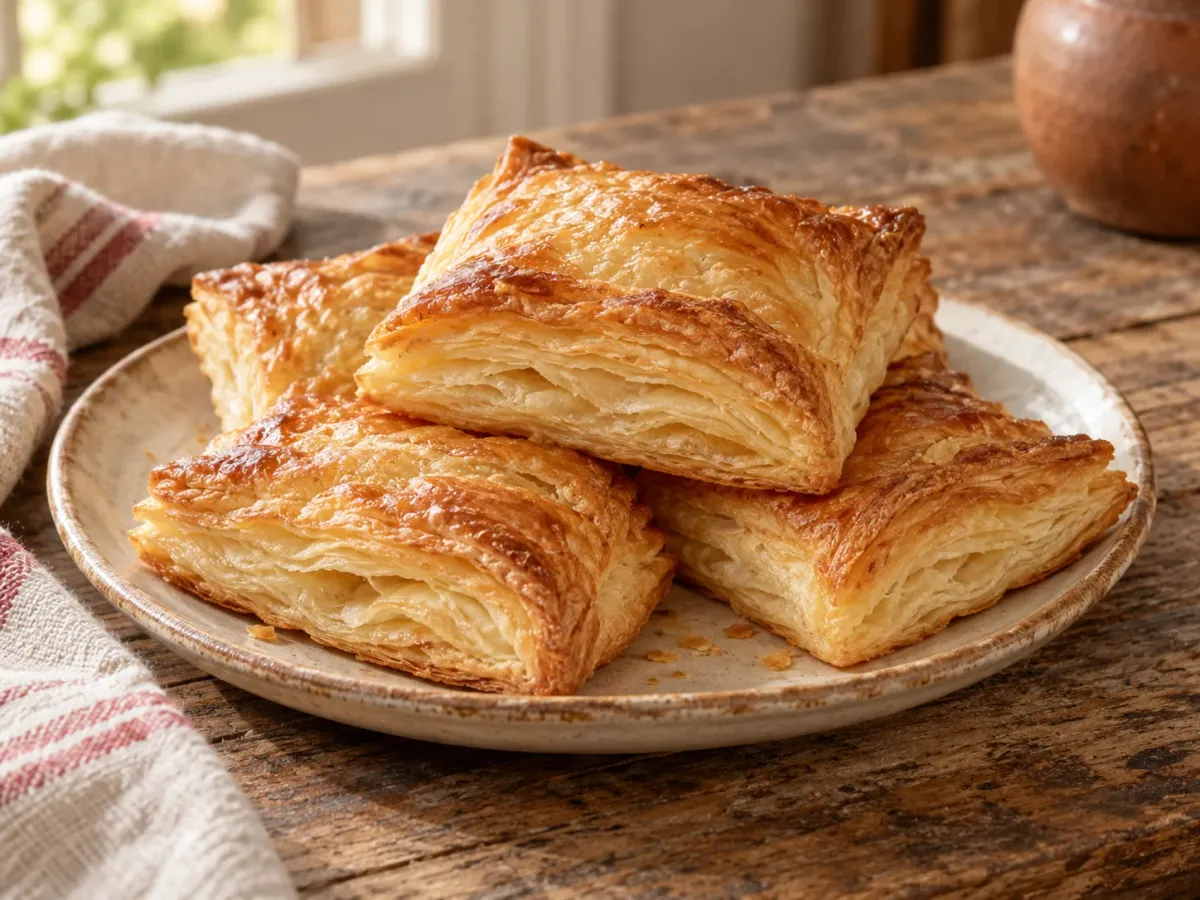
Puff Pastry
Layer butter and bread-flour dough into homemade puff pastry, with clear chilling stages and guidance for baking a plain sheet.
Prep
45 min
Cook
45 min
Prep + cook
90 min
Serves
24
Estimated timings. Allow at least 2 hours of chilling between turns and before use. Cook time includes a 20-minute oven preheat and about 25 minutes baking a plain sheet; filled pastries vary.
Ingredients
- 600g bread flour, plus a little for dusting
- 2½ tsp fine salt
- Up to 480ml cold water
- 455g unsalted butter, pliable but cool
Method
- 1
Put the butter between two sheets of baking paper and pound into an even rectangle about 15 x 20cm. Refrigerate for about 20 minutes until cool but bendable, not brittle.
- 2
Mix the flour and salt. Gradually add water just until a firm, nonsticky dough comes together; you may not need every drop. Cover and rest for 10 minutes.
- 3
Roll the dough into a rectangle roughly twice as long as the butter block, about 1cm thick. Set the butter in the centre and fold the dough over it, pinching the seams to seal completely.
- 4
Roll gently to a long rectangle about 1cm thick, keeping the edges straight. Brush off loose flour and fold into thirds like a letter. This is the first turn. Wrap and chill for 30 minutes.
- 5
With an open edge facing you, roll and fold twice more, counting each letter fold. Chill for 30 minutes, or sooner if the butter softens or leaks.
- 6
Repeat rolling and letter-folding three more times for six turns in total, chilling whenever necessary. Wrap and refrigerate for at least 1 hour before shaping.
- 7
For a plain pastry sheet, preheat the oven to 200°C for 20 minutes. Roll pastry to about 5mm thick, cut clean edges and place on a lined tray. Bake for about 25 minutes until well risen, deeply golden and dry between the layers. Follow the relevant recipe for filled shapes.
Keep butter and dough equally pliable
Puff pastry rises because thin layers of water-rich dough and butter separate in the oven. Hard butter breaks into chunks; soft butter smears into the flour. You want both parts to bend together under the rolling pin. If the surface looks greasy or the dough fights back, chill it before continuing.
Count the turns
Each letter fold multiplies the layers. Keep a tally on your wrapping so you stop at six, and brush away excess flour before folding. A ruler-straight rectangle makes the layers more even than an oval with thick ends. Roll firmly without crushing the edges shut.
Use and store the pastry
A pale surface can hide raw, doughy layers underneath, so bake until the sides also look crisp. Cut with a sharp knife rather than dragging a blunt edge through the layers. Keep wrapped pastry refrigerated for up to 2 days, or freeze in labelled portions and thaw in the fridge.
Use a portion for sausage rolls, or compare the tender mixing method in southern biscuits.