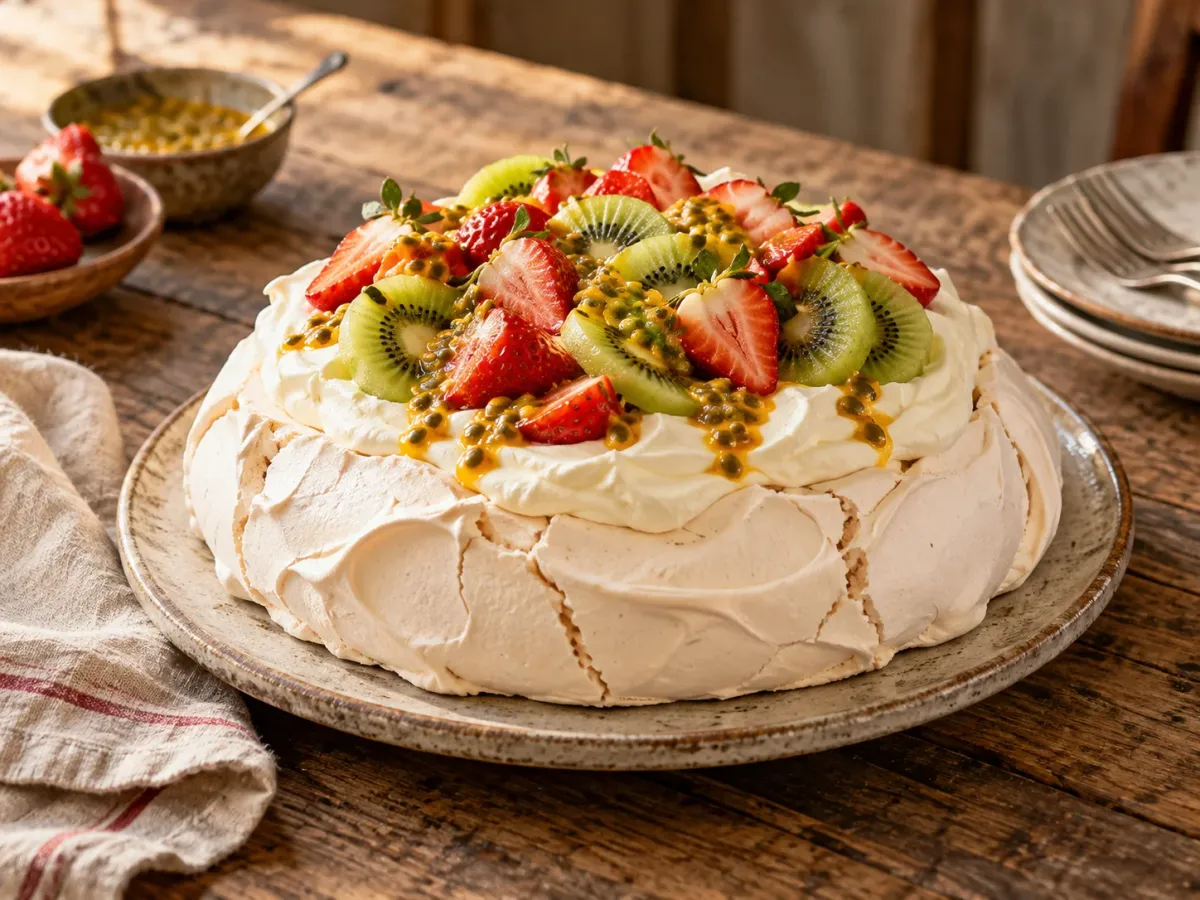
Pavlova
Whisk a water-assisted meringue, bake it with a reduced oven temperature, then cool slowly before adding cream and fruit.
Prep
20 min
Cook
75 min
Prep + cook
95 min
Yield
6–8 servings
Estimated timings. Cook time includes a 20-minute preheat and 55 minutes baking. Allow at least 2 hours to cool in the switched-off oven before topping.
Ingredients
- 2 large egg whites
- 300g caster sugar
- ½ tsp fine salt
- 1 tsp white vinegar
- 1 tsp cornflour
- 60ml freshly boiled water
- 250ml whipping cream, optional
- 300g fresh kiwifruit, strawberries or passionfruit, optional
- Ice cream, to serve, optional
Method
- 1
Heat the oven to 180°C. Line a baking tray with baking paper and mark an 18cm circle on the underside as a guide. Ensure the mixing bowl and beaters are completely grease-free.
- 2
Put the egg whites, sugar, salt, vinegar, cornflour and boiling water in the bowl. Beat with an electric mixer for about 12 minutes until thick, glossy and able to hold a peak; rub a little between your fingers to check the sugar feels dissolved.
- 3
Spoon onto the paper inside the circle, building a slightly raised edge and a shallow centre for the topping.
- 4
Bake on the middle rack for 10 minutes, then lower the oven to 150°C without opening the door and bake for 45 minutes more. The outside should feel dry and set.
- 5
Turn off the oven and leave the pavlova inside to cool completely, at least 2 hours. Top with whipped cream and fresh fruit just before serving, or offer fruit salad and ice cream alongside.
Keep fat away from the foam
Even a trace of yolk or grease can stop egg whites building a stable foam. Separate the eggs individually before adding to the mixing bowl. Fine caster sugar dissolves more readily than coarse granulated sugar and gives a smoother meringue surface.
Cool slowly
The initial hotter oven sets the shape, while the lower temperature finishes the shell. Sudden cooling encourages cracks, so leave the oven closed as it cools. Small cracks are normal and provide useful places for cream and fruit to settle.
Top at the last moment
Cream and cut fruit bring moisture to a dry shell. Add them close to serving to preserve the contrast between crisp outside and soft centre. Tart fruit balances the sweet meringue particularly well. Keep the untopped cooled shell dry rather than covering it while warm.
For a citrus meringue dessert, see tarte merengada, or choose apple pie for a pastry-based pudding.