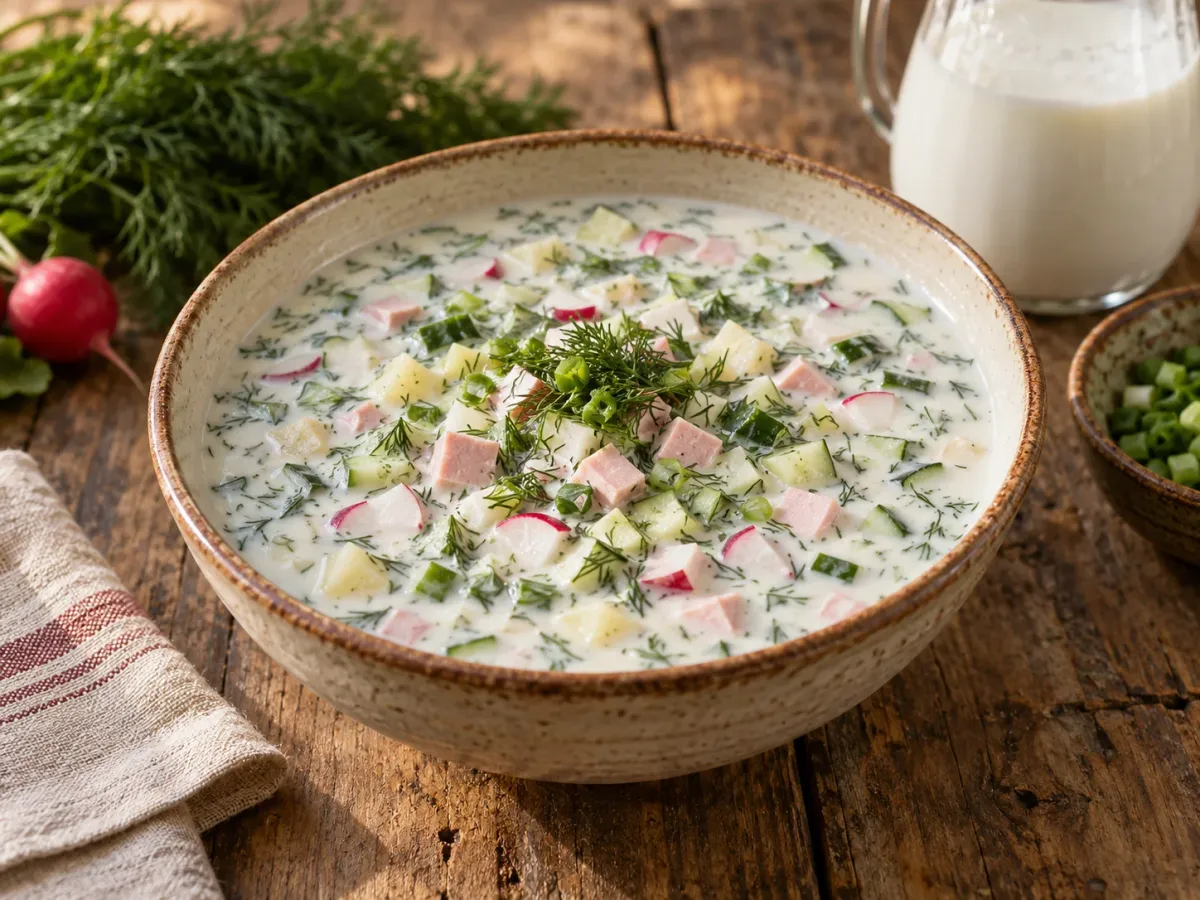
Russian Okroshka with Kefir
A cold Russian soup of kefir, potatoes, eggs, cucumber, radishes and dill, with cooked chicken or sausage for a substantial summer bowl.
Prep
25 min
Cook
35 min
Prep + cook
60 min
Yield
About 8 main-course portions
Estimated timings. 25 minutes of chopping and assembly, plus about 35 minutes heating water and simmering medium potatoes; eggs cook alongside. Excludes cooling the cooked ingredients and chilling the assembled soup. Makes approximately eight main-course portions.
Ingredients
Cooked ingredients
- 450g potatoes (2–3 medium), scrubbed, skin on
- 4 eggs
- 500g ready-to-eat cooked sausage or cooked chicken, chilled
Vegetables and soup base
- 600g cucumbers (2 long or 4 short), diced into 5–8mm pieces
- 150g radishes (10–12), trimmed and finely diced
- 3 spring onions, finely sliced
- 20g fresh dill, finely chopped
- 2 litres plain unsweetened kefir, chilled; editorial quantity because the source gives no unit
- 250–500ml chilled drinking water or plain mineral water, as needed
- 1 tsp fine salt, then more to taste
Method
- 1
Put the potatoes in a saucepan, cover with cold water by 2cm and bring to a boil. Reduce to a steady simmer and cook for 20–25 minutes, until a knife slides easily through the centre; drain. Larger potatoes take longer.
- 2
Meanwhile, lower the eggs into a separate pan of gently boiling water and cook for 10 minutes. Transfer to cold water. Cool both the eggs and potatoes completely before assembling the cold soup.
- 3
Peel the cooled potatoes and eggs, then dice into 5–8mm pieces. Dice the cooked sausage or chicken to the same size so each spoonful has a balanced mix.
- 4
Combine the potatoes, eggs, meat, cucumbers, radishes, spring onions and dill in a clean 5-litre pot or large bowl. Stir gently to avoid crushing the potatoes.
- 5
Pour in the cold kefir and stir in 1 teaspoon salt. Add chilled water 100ml at a time until the mixture pours easily but still holds plenty of vegetables in each ladle.
- 6
Taste and adjust the salt. Serve cold, or refrigerate for 30 minutes before serving so the dill and spring onion flavour the kefir; this optional chilling is additional to the listed time.
Small pieces make the soup
Okroshka is a chopped cold soup, so the size of your ingredients matters as much as the liquid. Keep the potatoes, eggs and meat close to the cucumber’s small dice. Large chunks fall to the bottom and leave you drinking kefir between mouthfuls; a small, even cut distributes the vegetables through every spoonful.
Cook the potatoes whole in their skins to limit how much water they absorb. Let them cool before dicing: hot potato breaks apart when stirred and turns the soup starchy. This is a good reason to prepare the potatoes and eggs ahead of assembly.
Choose the liquid deliberately
Use plain, unsweetened kefir. Its acidity gives the rich eggs and potatoes a fresh finish, while a little water loosens its texture. Brands vary in thickness, so add the water gradually instead of treating it as a fixed amount. Start with the measured kefir, then use water to adjust its consistency rather than its flavour.
The source also offers kvass as an alternative. Choose a bread kvass intended for savoury soup and add it gradually to the chopped ingredients; its thinner texture and different sweetness need their own seasoning adjustment. You are changing the base of the soup, rather than making an exact dairy substitution.
Keep the crunch and herbs fresh
Cucumber and radish supply the contrast to the soft potatoes and eggs. Dice them shortly before assembly and keep the prepared soup cold. Dill and spring onion are seasoning ingredients here, so use the green parts as well as the spring onion whites. Add extra salt only after the kefir is mixed through; sausage brings its own salt.
For another cold soup built around kefir and fresh herbs, try Lithuanian cold borscht. Its beetroot base gives you a different balance of sweetness and acidity.
Serving a cold main course
Serve okroshka in chilled bowls with a spoonful of the chopped solids in each ladle. The cooked meat makes this a substantial bowl; bread can stay on the side rather than being stirred into the soup. If you prefer a hot vegetable soup, Ukrainian borscht uses the same practical idea of tender roots balanced with a sharp dairy finish.