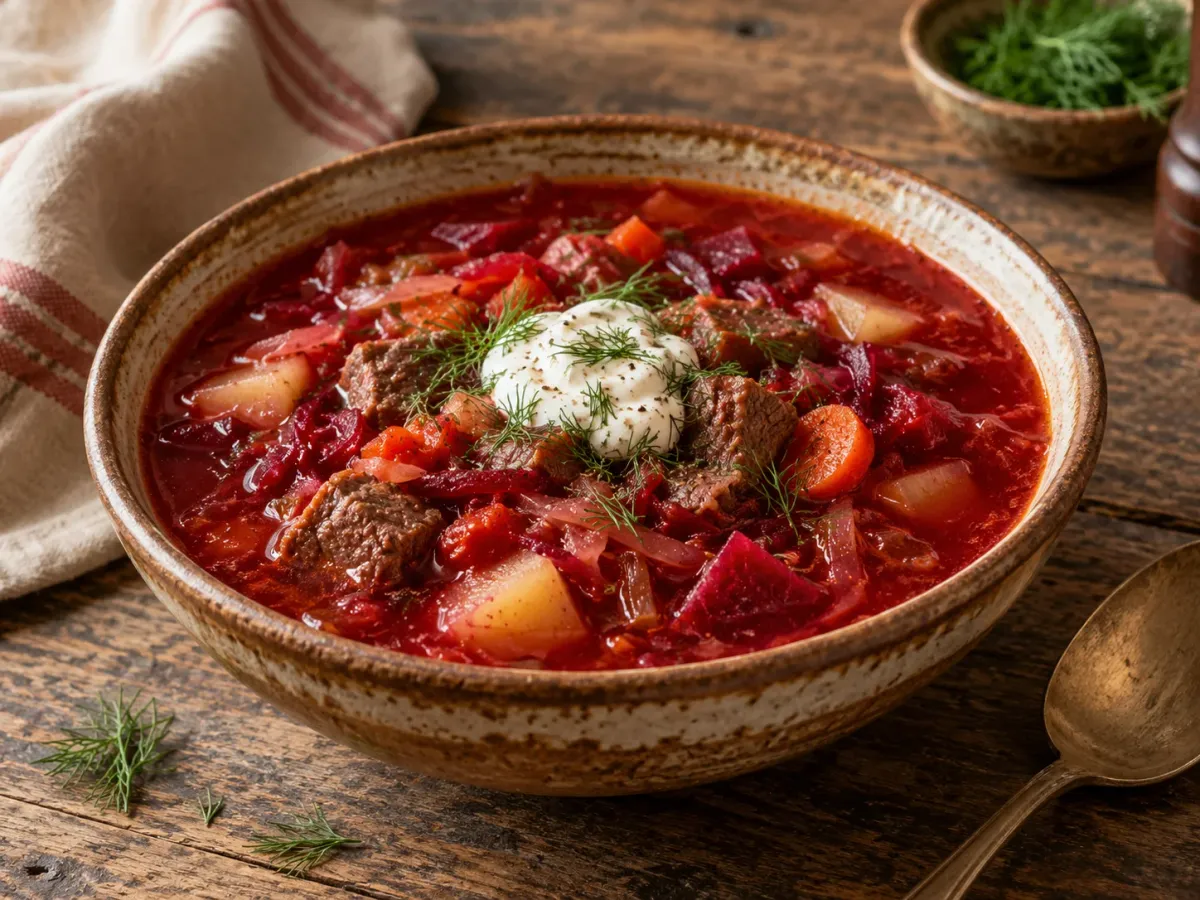
Modern Beef Borscht with Crunchy Cabbage
A modern beef borscht with grated beetroot, tomatoes, cumin and coriander, finished with cabbage that stays crisp in the hot broth.
Prep
45 min
Cook
105 min
Prep + cook
150 min
Yield
8-10 servings
Estimated timings. Allow 45 minutes to prepare the vegetables and beef and about 105 minutes for browning, heating the broth and simmering. Assumes 2cm beef cubes and grated beets; tougher stewing beef can need longer.
Ingredients
Beef and vegetables
- 450g beef, cut into 2cm cubes; tenderloin as in the source, or stewing beef with extra cooking time as needed
- 1 onion (about 150g), finely diced
- 3 carrots (about 250g), peeled and sliced 2–3mm thick
- 500g beetroot (2 large or 3 medium), peeled and coarsely grated
- 4 celery stalks (about 200g), sliced 2–3mm thick
- 2 large potatoes (about 500g), peeled and cut into 2cm cubes shortly before use
- 4 garlic cloves, finely chopped
- 1/2 cabbage (about 500g), core removed and leaves cut into 1cm pieces
Broth and seasoning
- 1 litre beef stock, plus up to 500ml hot water if needed to cover the vegetables
- 1 × 400g can diced tomatoes with their juice
- 2 tbsp olive oil
- 30g butter
- 1 heaped tbsp ground cumin
- 1 heaped tbsp ground coriander
- 3 bay leaves
- 15g fresh dill, chopped, or 2 tsp dried dill
- Salt and freshly ground black pepper, to taste
- 150g sour cream, to serve (optional)
Method
- 1
Prepare the onion, garlic, carrots, celery and grated beets. Keep the beets separate from the onion mixture. Pat the beef dry and season lightly with salt and pepper.
- 2
Heat the olive oil in a heavy 6-litre pot over medium-high heat. Sear the beef in two batches for 5–7 minutes in total, turning until browned on several sides. Transfer to a bowl and keep its juices.
- 3
Reduce the heat to medium and add the butter, onion, garlic, carrots and celery. Cook for 6–8 minutes, stirring and scraping the base, until the onion is translucent and the carrots start to soften.
- 4
Return the beef and its juices to the pot with the beets, tomatoes, stock, cumin, coriander and bay leaves. Add enough hot water to just cover the mixture if needed, then bring to a boil.
- 5
Cover and simmer gently for 60 minutes, stirring occasionally. Check the beef: a fork should enter easily. If stewing beef is still chewy, continue simmering until nearly tender before adding the potatoes.
- 6
Add the potato cubes and dill, cover and simmer for 15–20 minutes, until a knife passes through a potato without resistance. Keep the broth at a gentle simmer and top up with hot water if it becomes too thick.
- 7
Stir in the cabbage and simmer uncovered for 2 minutes, until hot but still crisp. Taste and adjust salt and pepper, then remove the bay leaves.
- 8
Ladle into bowls and serve with a spoonful of sour cream, if using. Allow about 105 minutes for browning, heating and simmering; follow the beef and potato tenderness cues if they need longer.
A modern interpretation of borscht
Borscht belongs to a broad Eastern European cooking tradition, with Ukrainian beet soup an essential reference point. This version combines beef with a substantial dose of cumin and coriander, then adds cabbage at the very end. Treat those as the character of this recipe, rather than a claim that every borscht should taste this way. For a broth-based version without beef pieces, see Ukrainian borscht.
Choose beef for the cooking time
The source recommends tenderloin and gives stewing beef as an alternative. Those cuts behave differently. Tenderloin softens quickly and can lose its juiciness during a long simmer; stewing cuts need enough time for their connective tissue to soften. If you use stewing beef, let tenderness decide when to add the potatoes. Adding them to still-chewy meat forces a choice between hard beef and collapsing potatoes.
Brown the beef in batches so moisture can evaporate. Keep the juices that collect in the bowl and return them to the pot: they belong in the broth. A little stock stirred into the pot also loosens the browned residue before it burns.
Grate the beetroot, then control the simmer
Grated beetroot cooks evenly and distributes colour through the broth. Large cubes need a different cooking schedule and leave you with a chunkier soup. A coarse grater is the simplest way to keep the listed cooking window practical.
Keep the covered pot at a gentle simmer. A rolling boil throws the vegetables around and evaporates liquid quickly without making the beef tender on command. Pot widths and vegetable sizes affect how much water you need; add only enough to keep the mixture loose and submerged.
Cabbage belongs at the finish
Two minutes in hot broth warms finely cut cabbage while leaving a clear crunch. This is a defining choice in the source method. If you simmer the cabbage with the beets, you make a softer, sweeter soup instead. Reheated cabbage will soften further, so add fresh cabbage to individual portions when you want the same contrast in leftovers.
Serve sour cream at the table so each person can balance the earthy broth. For beetroot with a completely different texture and temperature, Lithuanian cold borscht pairs grated beets with kefir and cucumber.