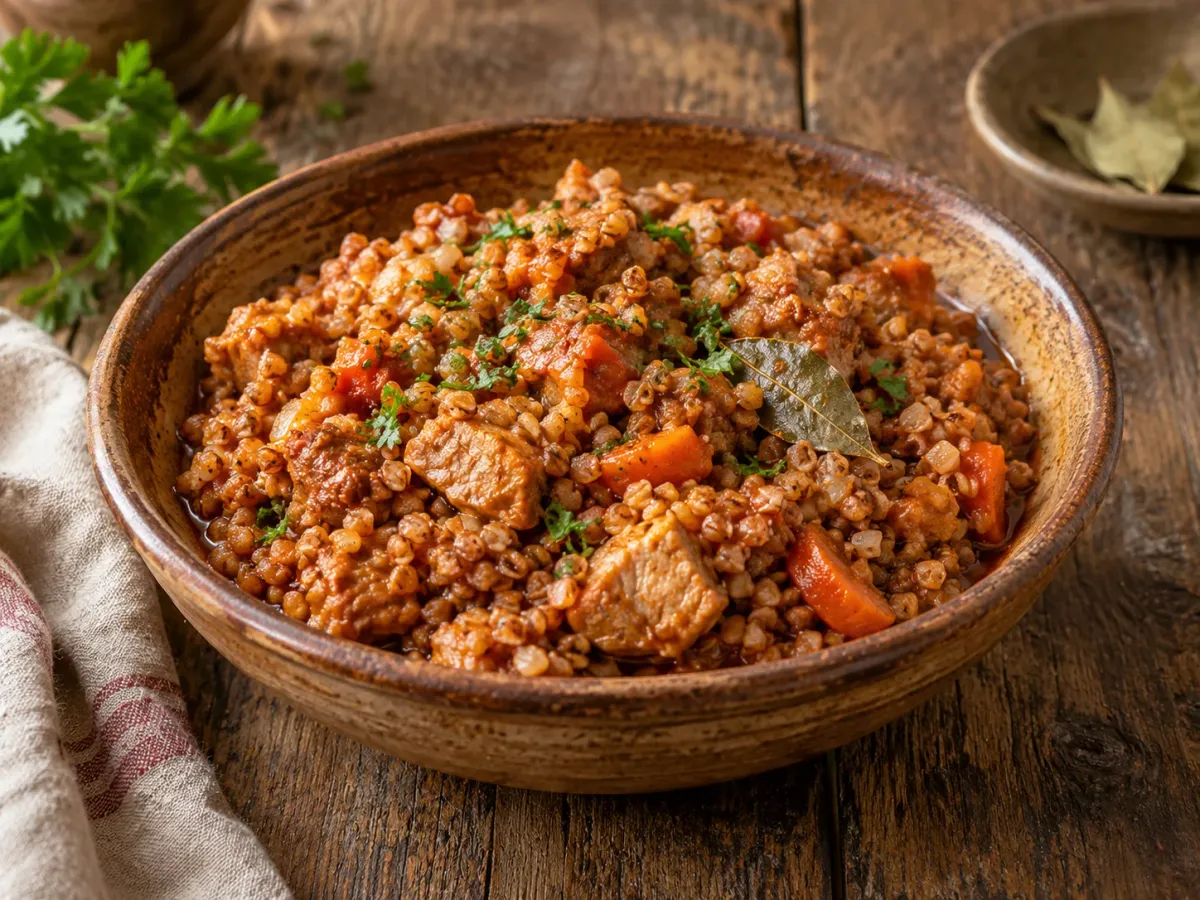
Merchant's Buckwheat with Pork
Cook Merchant's buckwheat with pork, carrots and tomato paste in one covered pan, with clear liquid measurements and tender-grain checks.
Prep
15 min
Cook
45 min
Prep + cook
60 min
Serves
2
Estimated timings. For 2 hearty portions: 15 minutes preparation and about 45 minutes cooking, including 10–15 minutes frying, bringing to a simmer and 25 minutes covered. Allow longer if the pork or groats need it; excludes an optional 5-minute covered rest.
Ingredients
Pork and buckwheat
- 400g boneless pork loin or tenderloin, cut into 1.5cm cubes
- 125ml dry buckwheat groats (approximately 90g), rinsed and drained
- 300ml water, plus a little boiling water if needed
- 1 medium carrot (about 100g), cut into small 5mm pieces
- 1 small onion (about 100g), finely chopped
- 90–120g tomato paste (6–8 tablespoons), to taste
- 10g plain wheat flour, for dusting the pork
- 15ml neutral oil
Seasoning
- 3–4 garlic cloves, peeled and lightly crushed
- 1/2 teaspoon ground turmeric
- 1/4 teaspoon chilli powder (optional)
- 3–4 bay leaves
- 10g parsley, chopped, plus a little to serve
- 1/2 teaspoon fine salt, then adjust to taste
- 1/4 teaspoon ground black pepper
Method
- 1
Pat the pork dry, cut it into 1.5cm cubes and toss with the flour until lightly coated. Chop the onion and carrot, crush the garlic, and rinse and drain the buckwheat.
- 2
Heat the oil in a wide, heavy frying pan with a lid over medium-high heat. Add the pork and onion and fry for 10–15 minutes, stirring occasionally, until the onion softens and the pork develops some colour; lower the heat if the onion starts to scorch.
- 3
Add the water and tomato paste, scraping up any browned flour from the bottom. Stir in the drained buckwheat, carrot, turmeric, optional chilli powder, salt and pepper.
- 4
Add the garlic, bay leaves and parsley and bring to a gentle boil. Cover tightly, turn the heat to low and simmer gently for about 25 minutes.
- 5
Check a few groats and a piece of pork: the buckwheat should be tender without a hard centre, the carrot soft and the pork cooked through and tender. If the pan dries before the groats soften, add 30–50ml boiling water and cover for another 5 minutes, then check again.
- 6
If excess liquid remains once everything is tender, uncover and simmer for 2–3 minutes. Remove the bay leaves, taste and adjust the seasoning, and serve hot with fresh parsley; you can leave the pan covered off the heat for 5 minutes first to let the remaining moisture settle.
Buckwheat that carries the sauce
This version of Merchant’s buckwheat cooks the groats in the same pan as pork, onion and tomato paste. You keep the browned meat juices rather than draining them away, and the grain absorbs them as it softens. The source makes two hearty portions with considerably more pork than buckwheat; the quantities here keep that balance.
Use whole buckwheat groats, not buckwheat flour or flakes. The volume measurement of 125ml comes from the source; the gram weight is approximate because groat size and packing vary. Our rice guide gives you a plain-grain option when you want to serve a separate side instead.
A gentle simmer protects the grain
A tight lid matters more than vigorous heat. Hard boiling evaporates the cooking water before the groats finish and can leave flour stuck to the pan. Keep the simmer quiet and check the texture before adding more water: you want moist grains with a little tomato sauce, rather than a pot of soup.
The tomato-paste quantity is deliberately substantial. Start with 90g for a less concentrated sauce and use 120g if you prefer the source’s stronger tomato flavour. Salt after tasting because brands differ in salt content.
Choose pork for the cooking time
Small cubes of loin or tenderloin suit the source’s relatively short covered simmer. A shoulder joint needs a longer braise to soften; substituting it without changing the schedule leaves you with chewy meat even when the grain is ready. Keep the cubes close in size so they cook evenly.
The flour is a light coating, not a thick crust. Its job is to help the tomato liquid cling to the pork. Shake off any loose excess before frying so it does not collect and burn on the bottom.
Serving and checking the grain
Serve this as a complete main with a sharp cucumber salad or pickles alongside. If you are planning a Russian meal, Pozharskiye cutlets offer a different chicken-and-breadcrumb main for another day.
The groats should remain distinct and the pan should look moist rather than soupy. Let the covered pan stand briefly after cooking if you want the grains to settle, and add a little hot water if the sauce tightens before the pork is tender.