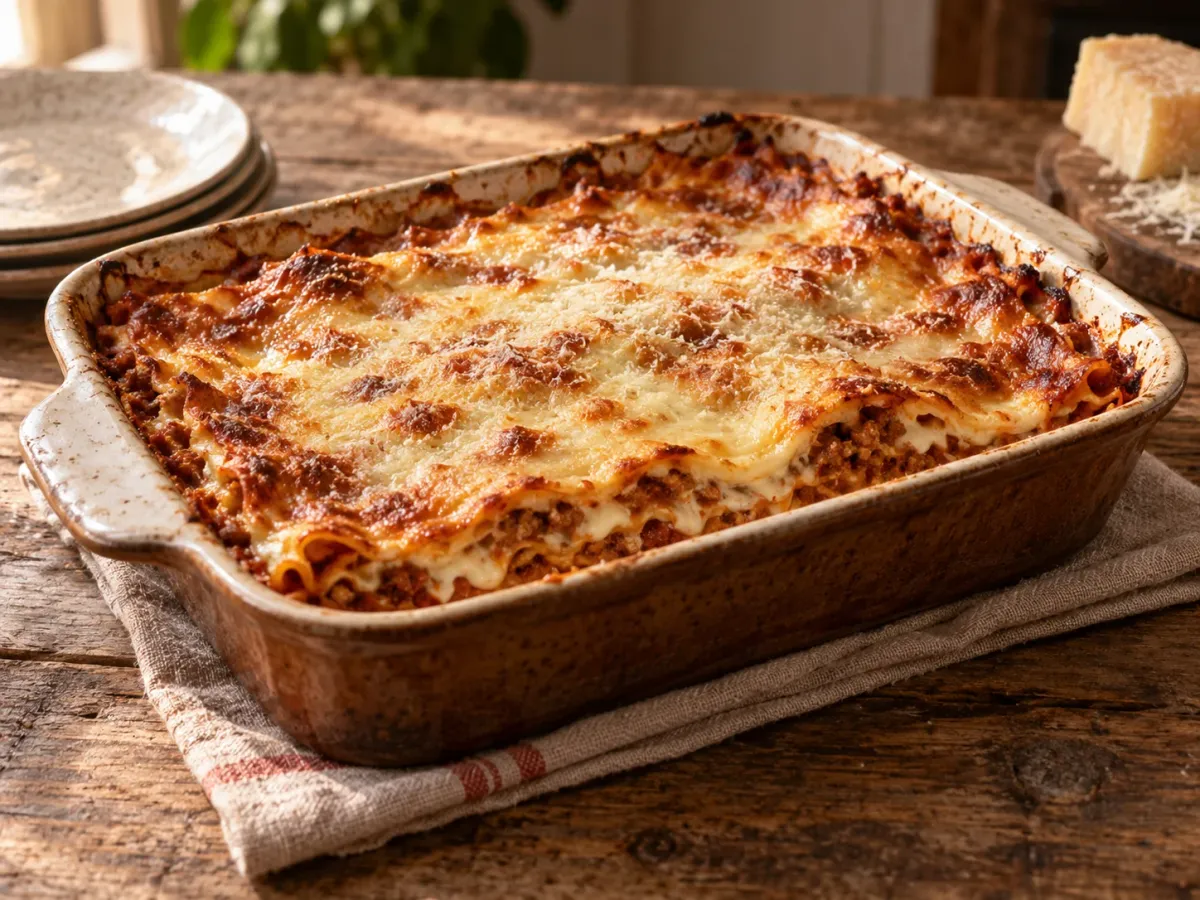
Lasagna
Layered lasagna with meat sauce, béchamel or ricotta, Parmesan and a golden mozzarella topping.
Prep
25 min
Cook
65 min
Prep + cook
90 min
Serves
6
Estimated timings. Assumes prepared meat sauce and béchamel or ricotta filling. Includes oven heating, optional noodle boiling and 45–50 minutes baking. Add 10 minutes resting; homemade sauces take extra time.
Ingredients
- 1 litre prepared bolognese or meat pasta sauce
- 600ml prepared béchamel or ricotta lasagna filling
- 250g lasagna sheets, or enough for the layers
- 150g low-moisture mozzarella, grated
- 50g Parmesan, finely grated
- 100g grated Emmental (optional, stirred into béchamel)
Method
- 1
Prepare the meat sauce and béchamel or ricotta filling before assembly. Stir optional Emmental into the warm béchamel. Heat the oven to 175°C.
- 2
Boil the lasagna sheets first if their packet requires it. Drain and separate so they do not stick.
- 3
Spread a thin layer of meat sauce across a deep 2.5–3-litre baking dish. Add a layer of pasta, then béchamel or ricotta. Add more pasta, meat sauce and a little Parmesan. Repeat until the ingredients are used, keeping the dish below the rim and finishing with béchamel or ricotta.
- 4
Top with the remaining Parmesan and mozzarella. Cover with foil without pressing it into the cheese.
- 5
Bake for 30–35 minutes, remove the foil and bake for another 10–15 minutes until golden, bubbling and hot through the centre; a meat-filled casserole should reach 74°C.
- 6
Cover loosely and rest for 10 minutes before slicing.
Start with prepared sauces
This is the assembly and bake stage. Make bolognese and béchamel first, or use ready-made sauce and a prepared ricotta filling. Both should be spreadable. A very dry meat sauce leaves firm pasta edges, while a watery sauce makes the layers slide apart.
Match sheets to the packet
Some lasagna sheets need boiling, while others are designed to absorb liquid in the dish. Follow the packet rather than assuming all dry sheets behave alike. Break sheets to fit without creating thick overlapping stacks, especially at the corners.
Protect the top, then brown it
Foil keeps the surface from drying before the centre is hot. Remove it for the final colouring so the mozzarella can bubble. Resting gives the pasta time to absorb loose sauce and makes portions easier to lift. Use a deep dish with room below the rim for bubbling juices.