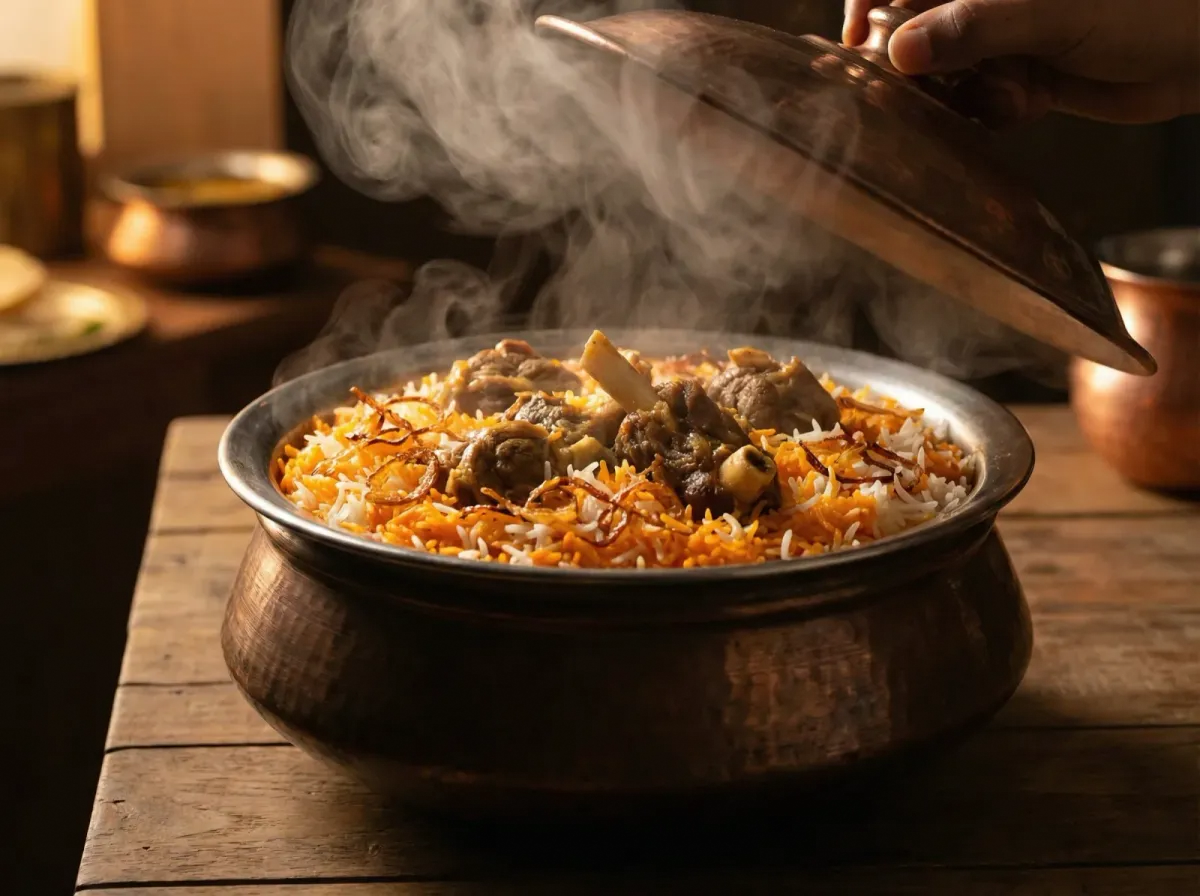
Kacchi Biryani (Dum Pukht Method)
Raw marinated mutton layered under parboiled basmati and slow-cooked sealed under dough — the most demanding and most rewarding biryani there is.
Prep
120 min
Cook
90 min
Total
210 min
Serves
6
Ingredients
Meat and marinade
- 1.5kg bone-in mutton (goat), large pieces — shoulder or leg
- 500g full-fat yogurt, whisked until smooth
- 2 tbsp ginger-garlic paste
- 2 tsp kewra water (screwpine essence)
- 1 tsp saffron, steeped in 4 tbsp warm milk
- 2 tsp garam masala
- 1 tsp red chilli powder
- 1/2 tsp turmeric
- 2 tsp salt
- 100ml mustard oil (or neutral oil)
- Juice of 1 lime
Rice
- 600g aged basmati rice, soaked 45 minutes then drained
- 4 green cardamom pods
- 2 bay leaves
- 1 star anise
- 2-inch piece cinnamon
- 4 cloves
- 3 tbsp salt (for the parboiling water)
Layering and dum
- 150g ghee, divided
- 4 large onions, thinly sliced and deep-fried until deep golden (birista)
- Remaining saffron milk from marinade
- 250g plain flour mixed with water to form a stiff dough (for sealing)
- 2 tbsp rose water
Method
- 1
Combine all marinade ingredients with the mutton in a large bowl. Mix thoroughly, ensuring every piece is coated. Cover and refrigerate for a minimum of 4 hours — overnight is better.
- 2
Remove the mutton from the fridge 1 hour before cooking to come to room temperature.
- 3
Bring a very large pot of water to a rolling boil. Add all the whole spices and the 3 tbsp salt. Add the soaked, drained rice.
- 4
Parboil the rice for exactly 5–6 minutes — it should be 70% cooked, with a distinct white core still visible when you bite a grain. Drain immediately and spread on a tray to cool slightly.
- 5
Choose your dum pot — a heavy-bottomed pot with a tight-fitting lid. Layer the raw marinated mutton at the bottom in a single layer.
- 6
Cover the mutton with half the birista (fried onions) and drizzle with half the ghee.
- 7
Carefully layer the parboiled rice on top of the mutton. Drizzle the saffron milk and rose water over the rice. Scatter remaining birista and drizzle remaining ghee.
- 8
Roll the dough into a long rope and press it around the rim of the pot to create an airtight seal. Press the lid down firmly onto the dough.
- 9
Place the pot on a tawa (flat griddle) over low heat for 60–70 minutes. This indirect heat prevents the bottom from burning. Alternatively, place the sealed pot in an oven at 150°C for 75 minutes.
- 10
Remove from heat and allow to rest, still sealed, for 10 minutes. Break the dough seal at the table for the full dramatic reveal.
What Makes Kacchi Different
Kacchi means raw in Bengali and Urdu. In kacchi biryani, the meat goes into the pot uncooked, marinated but raw, and cooks entirely inside the sealed dum vessel alongside the rice. This is the opposite of pakki biryani, where the meat is fully cooked before layering.
The result is meat that is extraordinarily tender — cooked gently in its own juices and the yogurt marinade — with every layer of the rice absorbing different intensities of flavour depending on how close it sits to the meat.
In Bangladesh, kacchi biryani is the centrepiece of weddings and Eid celebrations — so central to the occasion that “biryani” at a wedding almost always means kacchi. It is not a weeknight dish. Plan for a full day. For a deeper look at how kacchi differs from the Hyderabadi pakki method, read our comparison of the two biryani architectures.
The Dough Seal
The atta (dough) seal is not just theatrical — it’s functional. It creates a completely airtight environment inside the pot, trapping steam and building pressure gently. This is what dum means: breath or slow exhalation of steam. The rice cooks as much from the steam below as from the heat around it.
Don’t skip it and cover with foil. The dough seal creates a different kind of pressure and moisture retention than foil.
Why Mustard Oil
Mustard oil is traditional in Bangladeshi cooking and has a distinctive pungency that becomes mellow and nutty when heated. If you cannot find it, use neutral oil — the biryani will still be excellent — but mustard oil is what gives it that specific depth.
The Birista
The fried onions (birista) are worth making properly. Slice the onions very thin and fry in batches in hot oil until they are deep golden-brown and crisp. Done right, they dissolve partially into the biryani during dum, releasing sweetness and colour.