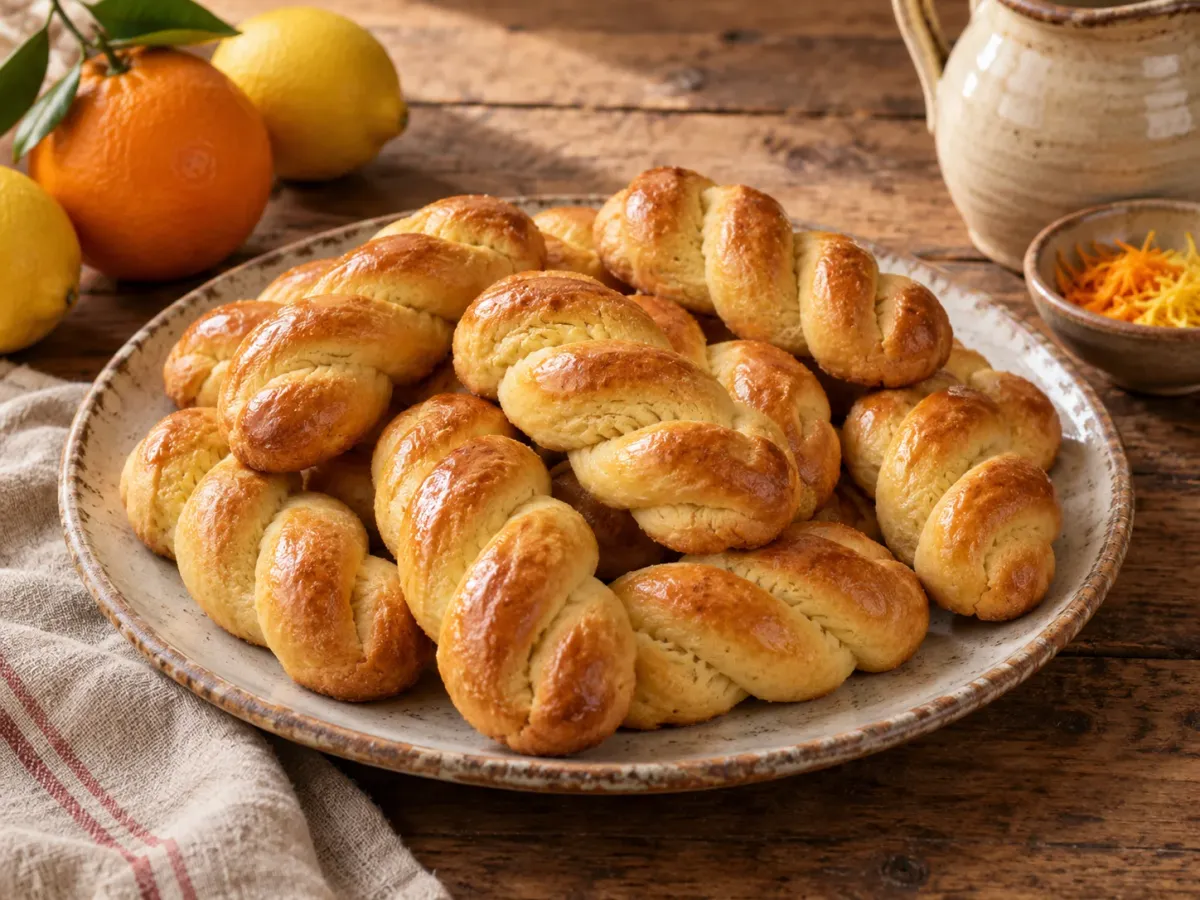
Greek Easter Cookies
Shape citrus-scented butter dough into thin twists and bake until golden, using baking ammonia for a light, crisp cookie.
Prep
60 min
Cook
160 min
Prep + cook
220 min
Yield
About 160 thin cookies, using 20g portions
Estimated timings. Allow a 30-minute dough rest and cooling time. The large batch needs about seven single-tray batches of 18–22 minutes plus a 20-minute preheat; baking two trays at once shortens this if your oven bakes evenly.
Ingredients
- 455g unsalted butter, softened
- 600g caster sugar
- 10 eggs, at room temperature
- 6 tsp baking powder
- 2 tsp food-grade baker’s ammonia (ammonium bicarbonate)
- 1 small pinch bicarbonate of soda
- 2 tsp vanilla powder
- Finely grated zest of 3 oranges and 2 lemons
- 120ml orange juice
- 240ml lukewarm milk
- ¼ tsp fine salt
- 1.1kg plain flour to start, plus more as needed for a soft rollable dough
- 1 egg yolk beaten with 1 tsp water, for glazing
- 1 tbsp neutral oil, for hands if needed
Method
- 1
Cream butter and sugar in a very large bowl until fluffy. Beat in the eggs one at a time, mixing well after each. Divide between two bowls if your mixer cannot handle the volume.
- 2
Stir the baker’s ammonia into the lukewarm milk. Add to the butter mixture with the orange juice, citrus zest and vanilla.
- 3
Mix 1.1kg flour with the baking powder, bicarbonate of soda and salt. Add gradually to the wet mixture. Work in more flour a little at a time only until the dough is soft and pliable enough to roll between your hands.
- 4
Cover the dough and rest for 30 minutes in a draft-free place. Heat the oven to 180°C conventional or 165°C fan and line baking trays with baking paper.
- 5
Weigh the dough and divide into roughly 20g portions, giving about 150–170 cookies depending on added flour. Roll each into a rope about 22cm long and 1cm thick, fold in half and twist loosely without pressing the strands into a thick knot. Leave space on the lined trays. Keep all parts thin so the ammonia can escape during baking.
- 6
Brush lightly with egg-yolk glaze. Bake one tray at a time for 18–22 minutes until golden and dry through the middle, rotating if needed. Plan about seven trays of 24 cookies. Cool fully on racks; the cooled cookies should have no ammonia smell. Bake two trays together only if your oven heats evenly, swapping positions halfway.
Use the right raising ingredient
Baker’s ammonia means food-grade ammonium bicarbonate, never household ammonia. It suits thin, dry cookies because the gas can escape in the oven. Keep the ropes slender and avoid dense knots. A lingering ammonia smell after cooling means the cookies need further drying, not immediate packing.
Add flour by feel
This is a large enriched dough, and egg size affects how much flour it takes. Start with the measured flour and add gradually until the dough rolls without smearing. You want pliable ropes, not a crumbly mass. Lightly oiled hands can help with shaping without adding unnecessary flour.
Watch the citrus glaze
Orange and lemon zest carry the citrus aroma more directly than juice alone. Grate only the coloured skin to avoid bitterness. The egg wash colours quickly, so watch the last minutes and judge the sides as well as the top. Cool on racks so the cookies finish crisp rather than steaming in a pile.
Serve with milk tea, or compare another butter dough in cinnamon waffle cookies.