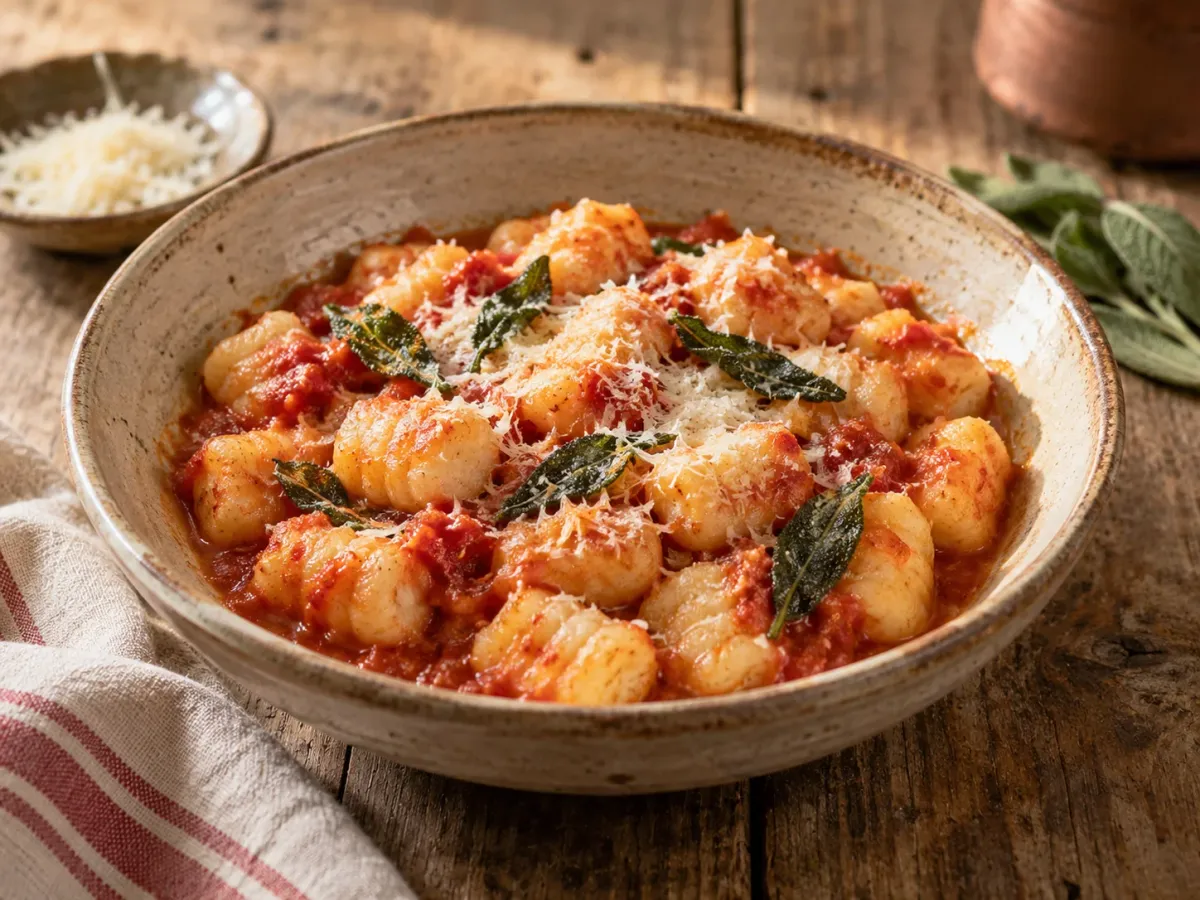
Gnocchi
Soft potato gnocchi boiled in batches, then lightly browned in sage butter and finished with Parmesan.
Prep
35 min
Cook
75 min
Prep + cook
110 min
Serves
4
Estimated timings. Includes boiling potatoes, heating fresh water and 3–4 cooking batches with pan finishing. Add 10 minutes steam-drying before shaping; potato moisture changes flour needs.
Ingredients
- 1kg floury potatoes, scrubbed
- 200–300g plain flour, plus a little for shaping
- 1 tsp salt, plus salt for the water
- 50g butter
- 6–8 sage leaves, or a few sprigs oregano or thyme
- 1 small ripe tomato, crushed (optional)
- 40g Parmesan, grated
Method
- 1
Cover the whole potatoes with water, bring to a boil and simmer for 25–35 minutes until tender. Drain, halve and scoop the flesh from the skins while safe to handle.
- 2
Mash or rice until lump-free, add the salt and let steam dry for 10 minutes. Work in 200g flour gently, adding more a little at a time only until a soft dough holds together.
- 3
Bring a fresh pot of salted water to a gentle boil. Test one small dumpling; if it falls apart, add a little more flour to the dough.
- 4
Roll portions on a lightly floured surface into ropes about 2cm thick. Cut into 2cm pieces and make a shallow thumb indentation in each.
- 5
Boil in 3–4 uncrowded batches. Once the gnocchi float, cook for another 30–60 seconds and lift out with a slotted spoon, reserving a little cooking water.
- 6
Melt the butter with sage in a wide pan over medium heat. Add optional crushed tomato. Toss the cooked gnocchi gently in batches for 1–2 minutes until lightly golden, adding a splash of cooking water if dry. Serve with Parmesan.
Dry potatoes need less flour
Boiling potatoes in their skins limits water absorption. Let the mashed flesh steam before adding flour so you can make a dough without turning it heavy. Floury potatoes work well; very waxy ones can feel sticky and tempt you to add too much flour.
Work the dough briefly
You need only enough handling to bring the potato and flour together. Long kneading develops a chewy texture. A small test dumpling tells you whether the dough holds before you shape the full batch; add a little flour if it breaks apart.
Boil, then brown
A gentle boil protects the dumplings, and a broad spoon lifts them without damage. Their ridges or thumb indentations catch butter. Sage is a classic pairing, while oregano or thyme gives a different fragrance. Serve immediately, or pair with bolognese sauce instead. For another soft starch to catch sauce, try corn polenta.