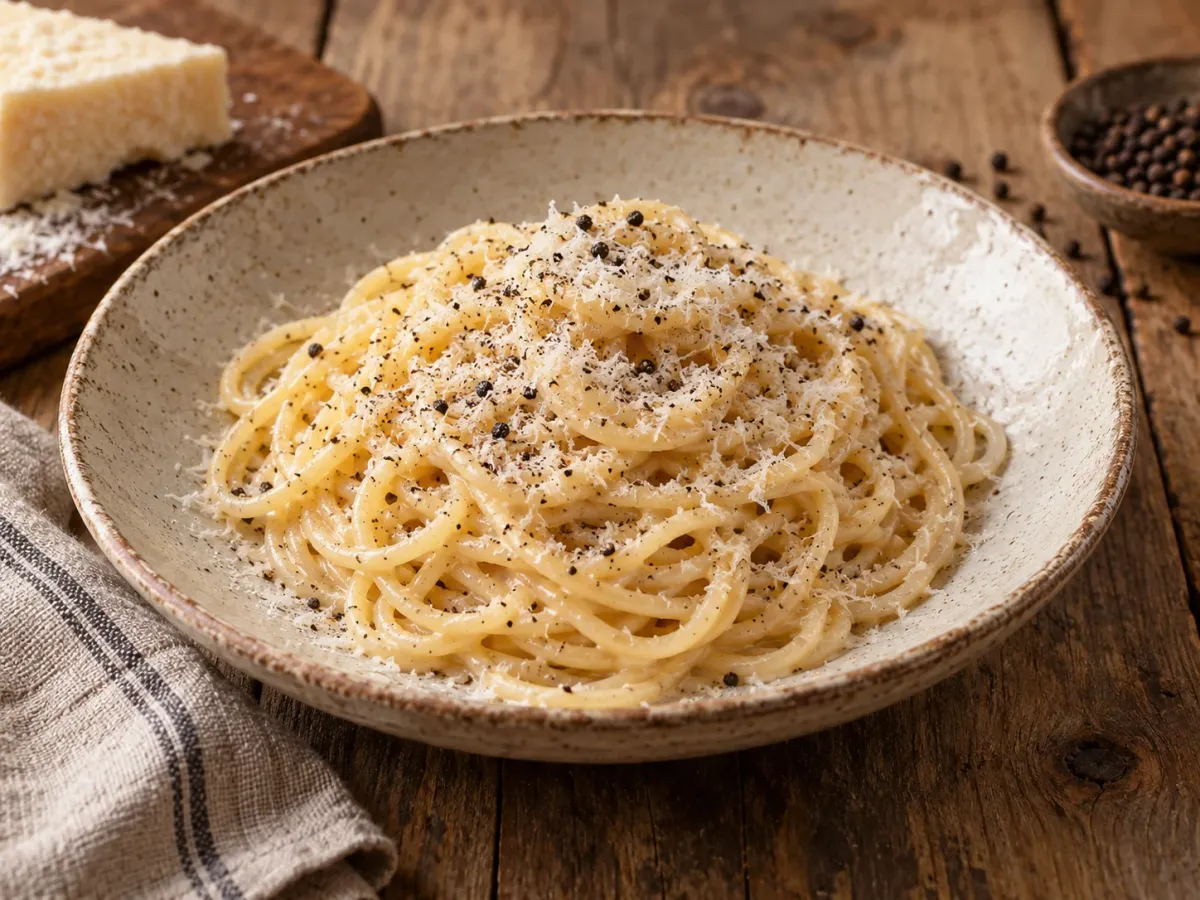
Cacio e Pepe
Finish spaghetti in peppery pasta water, then toss off the heat with Pecorino Romano for a glossy cheese sauce.
Prep
10 min
Cook
25 min
Prep + cook
35 min
Yield
2 servings
Estimated timings. Includes heating pasta water and finishing the spaghetti in the pan.
Ingredients
- 200 g spaghetti
- 100 g Pecorino Romano, very finely grated, divided
- 2 teaspoons black peppercorns, crushed
- Salt for pasta water, used lightly
- About 1.5 litres water for boiling
Method
- 1
Bring water to a boil and salt lightly. Cook spaghetti until 3–4 minutes short of the packet time. Reserve at least 400 ml pasta water before lifting out the pasta.
- 2
While it cooks, toast half the crushed pepper in a wide dry pan over medium heat for 30–60 seconds until fragrant. Add 2 tablespoons pasta water carefully.
- 3
Transfer spaghetti to the pepper pan. Add more pasta water a little at a time and toss over medium-low heat for 3–4 minutes until just al dente.
- 4
Let a few tablespoons of reserved water cool briefly until hot but not boiling. Mix with half the Pecorino in a bowl to form a smooth paste, adding water gradually.
- 5
Take pasta pan off the heat and let fierce bubbling stop. Add cheese paste and toss vigorously, adding small splashes of pasta water until glossy. Do not boil after adding cheese.
- 6
Serve immediately with remaining Pecorino and crushed pepper.
Fine cheese melts evenly
Pecorino Romano supplies both the sauce and much of the salt. Grate it very finely so it mixes readily with warm water. Coarse shreds need more heat to soften and are more likely to clump. Keep the cooking water lightly salted because the finished cheese adds plenty.
Use starchy water in stages
Finishing the spaghetti in the pan concentrates its starch around the pepper. That liquid helps the cheese cling to the strands. Add water gradually: you need enough to make the pasta slide, but not a deep pool. See pasta for the basic boiling technique.
Take the pan off the heat
Boiling heat can tighten cheese into strings and lumps. Toss the paste into pasta after the bubbling calms, then loosen with warm reserved water. Eat immediately while glossy. For a different creamy pasta, make tortellini with egg and cream.