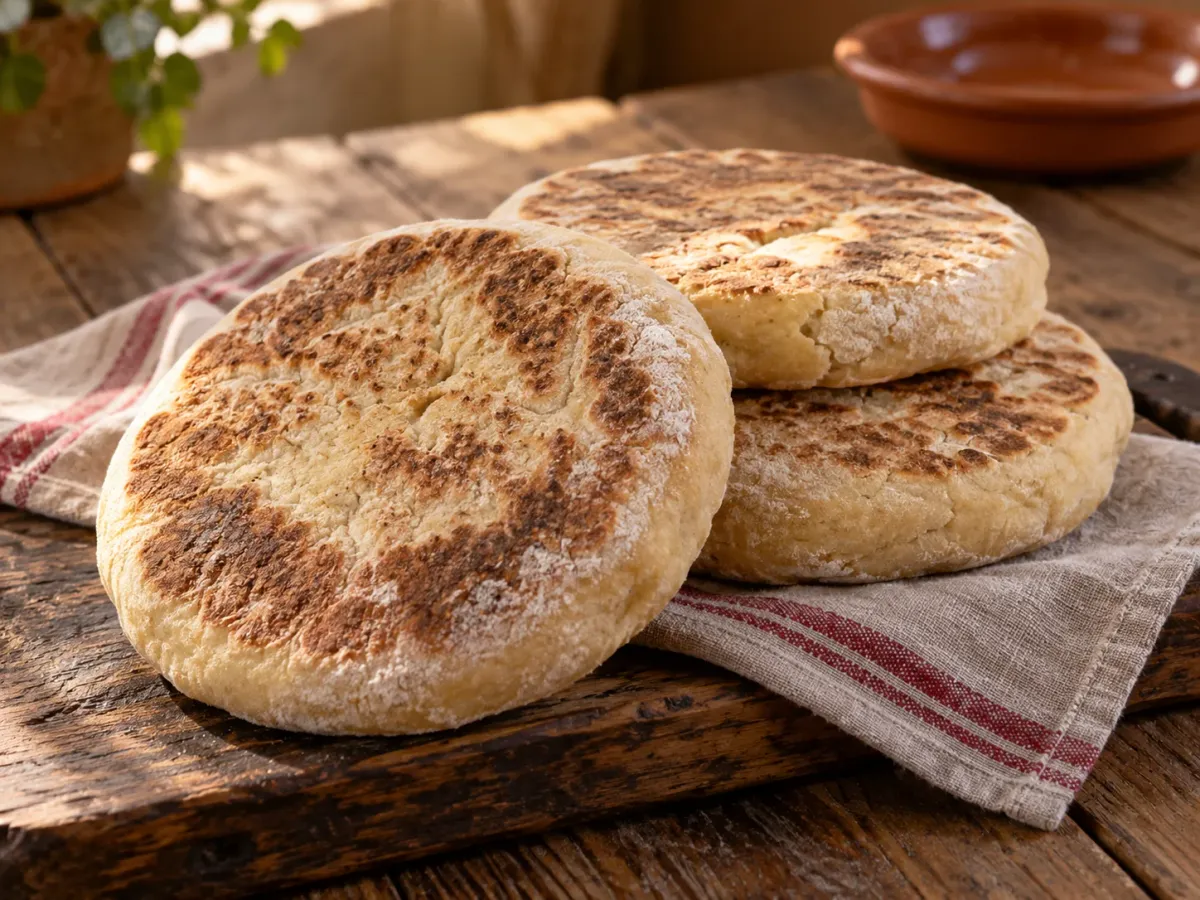
Bolo do Caco (Caco Bread)
Madeiran sweet potato breads with a tender crumb and a thin skillet crust, made with a three-day refrigerated dough.
Prep
35 min
Cook
95 min
Prep + cook
130 min
Yield
10 breads
Estimated timings. Allows 25 minutes for boiling and 70 minutes for pan heating and five batches of two breads. Add cooling, 3 days refrigerated fermentation and 30 minutes final proof.
Ingredients
- 750g sweet potato, peeled and cut into chunks
- 1kg plain flour, plus a little for shaping
- 150ml warm water, about 35°C, plus extra as needed
- 3 tbsp active dry yeast
- 3 tsp salt
- Salted butter and chopped parsley, to serve (optional)
Method
- 1
Cover the sweet potato with water, bring to a boil and simmer for about 20 minutes until easily pierced. Drain, mash with the salt and cool until lukewarm.
- 2
Mix the yeast with the warm water and leave for 10 minutes until foamy. Put the flour in a large bowl, add the mash and yeast mixture, and knead for 8–10 minutes until elastic. Add water a tablespoon at a time only if the dough will not come together.
- 3
Cover in a generously sized container and refrigerate for 3 days, leaving room for expansion.
- 4
Divide into 10 equal pieces on a lightly floured surface. Shape into balls and flatten to about 2.5cm thick. Cover and rest in a warm place for 30 minutes.
- 5
Heat a heavy dry frying pan over medium heat. Cook two rounds at a time for roughly 10–14 minutes, turning frequently, until both faces have a firm crust and the centres are cooked through. Lower the heat if they colour too quickly.
- 6
Use tongs to hold each bread on its edge against the pan, rotating to cook the sides. Keep the finished breads warm while cooking the remaining batches. Split and serve with butter and parsley if using.
Sweet potato makes the crumb
You get a moist, tender crumb from mashed sweet potato rather than added fat. Drain it thoroughly: trapped cooking water changes how much flour the dough can take. The dough should feel supple and slightly tacky, not like a dry pastry dough. Different sweet potatoes hold different amounts of moisture, so keep a little extra warm water beside you.
A crust from the pan
These thick rounds need steady heat to cook through before the surface gets too dark. A heavy pan holds that heat well. The distinctive edge is worth attention; a pale band around the middle usually means the sides need longer against the pan. For another dough cooked without an oven, try naan.
Split while warm
A warm round opens cleanly and absorbs salted butter. Add parsley if you like, or serve beside chicken soup for dipping. Cool spare breads completely before wrapping; trapped steam softens the crust. Reheat gently in a dry pan.