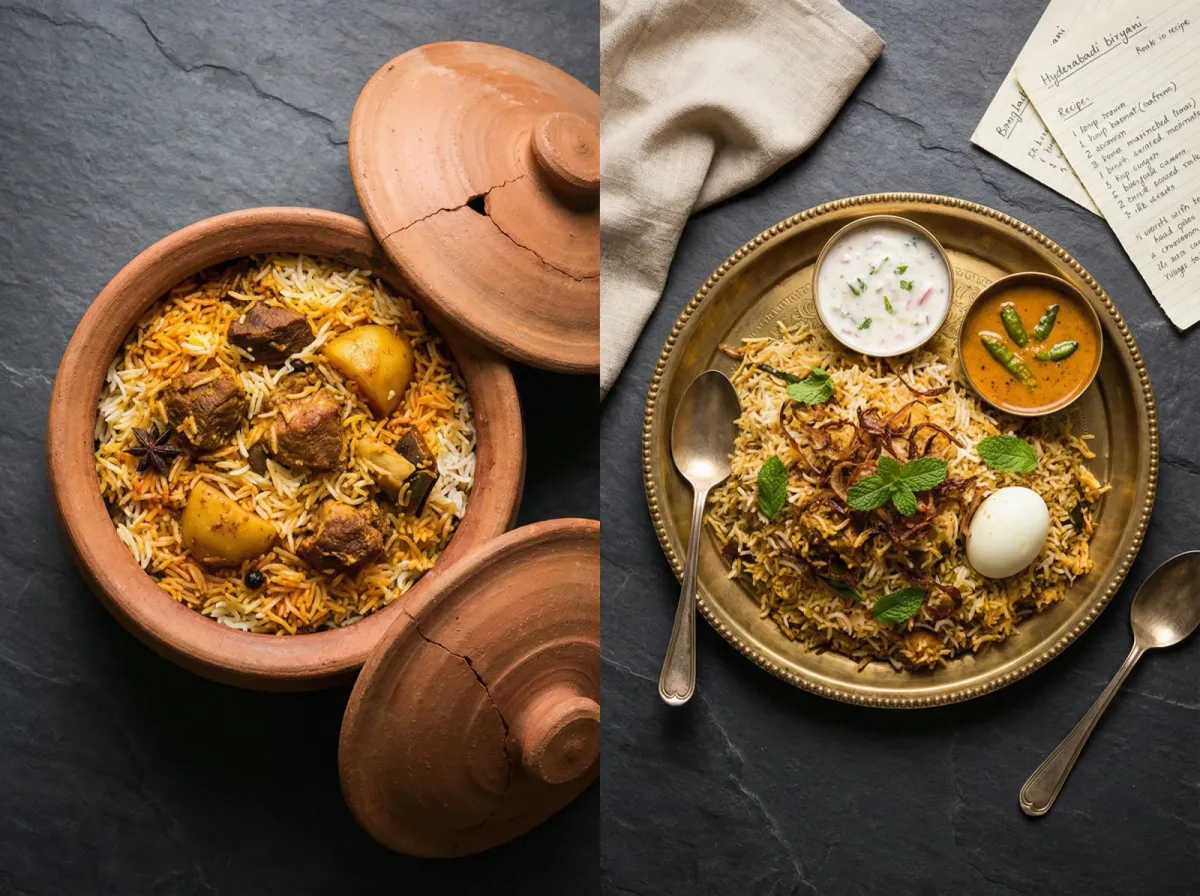
Kacchi vs Pakki Biryani: The Two Architectures of Dum Cooking
What separates kacchi biryani from pakki biryani? One cooks raw meat under sealed dum; the other layers pre-cooked meat. Here's how the techniques differ — and which to try first.
The Word That Explains Everything
The distinction between the world’s two great biryani traditions comes down to a single word: kacchi (raw) versus pakki (cooked).
In kacchi biryani, the meat goes into the pot raw, marinated but uncooked, and cooks entirely within the sealed dum vessel. In pakki biryani, the meat is cooked to completion first — braised or sautéed in a masala — before being layered with rice and sealed for the final dum.
Same pot. Same seal. Completely different result.
How Kacchi Works
The Bangladeshi kacchi biryani (and its Pakistani and Awadhi cousins) demands that you trust an unusual process: raw meat, surrounded by barely-parboiled rice, will cook perfectly inside a sealed pot with no additional liquid beyond the marinade.
The marinade is the key. Yogurt tenderises the meat through its lactic acid while also providing moisture. Ghee conducts heat. The meat releases its own juices as it cooks, which rise as steam, cook the rice from below, and fall back down flavoured and fat-enriched. It is a closed ecosystem.
The result is meat that is extraordinarily tender — almost braised in texture — with a final layer of caramelisation on the bottom (the crust, or tahdig, in Persian cooking tradition) from the sustained bottom heat.
How Pakki Works
The Hyderabadi pakki biryani — and most restaurant biryanis you’ll encounter outside South Asia — takes no such gambles. The meat is cooked properly in a flavoured masala first. Then parboiled rice is layered on top. The dum that follows is brief — 20 to 30 minutes — and serves primarily to meld the flavours rather than cook the meat.
This method is more forgiving. The meat is already done; you can’t overcook it in the final dum. It also allows more control over seasoning, since you can taste and adjust the meat masala before layering.
Why They Taste Different
The difference is not just texture but flavour architecture.
In kacchi biryani, the meat flavour moves upward through the rice as steam. The bottom layers of rice are intensely meaty and saturated; the top layers are lighter, more fragrant from the saffron and kewra water drizzled on top. Each mouthful from different levels of the pot tastes different. This vertical gradient is the point.
In pakki biryani, the flavour is more horizontally distributed. The rice has been exposed to the masala steam during dum, but the primary flavour carrier is the cooked meat pieces themselves, which you dig into the rice to find.
The Spice Philosophy
Bangladeshi kacchi relies on subtlety in the spice mix — the marinade uses yogurt, ghee, kewra, saffron, and a garam masala that should be fragrant rather than fiery. The complexity comes from time, not from an aggressive hand with chilli.
Hyderabadi dum biryani is more confident with its heat — a bold masala with fried onions, whole spices, and usually green chillies in the meat layer. The saffron is there, but it competes with more voices.
Neither is better. They are expressions of different culinary philosophies.
A Word on the Dough Seal
Both traditions use a dough (atta) seal to lock the pot. This is not merely theatrical — the dough creates a genuinely airtight environment that holds pressure better than a standard lid, even a heavy one. The steam cannot escape, and it builds to a gentle pressure that cooks the rice from the trapped vapour below as much as from the heat around the pot.
Some modern cooks use foil and a lid. It works, but the dum is less precise. The dough seal is worth the extra few minutes.
Which Should You Make First?
If you’ve never made biryani at home: pakki. The forgiving nature of pre-cooked meat means you can’t end up with raw meat in the middle of your pot. Hyderabadi dum biryani is an excellent starting point.
When you’re ready for the next level: kacchi. Clear your schedule, marinate the night before, and commit to the process. The result — that moment when you break the dough seal at the table and the steam rises — is one of the most satisfying experiences in South Asian cooking.
We have a detailed kacchi biryani recipe here on ProperMasala. Start wherever feels right.